
B2B sales is a field of work that is fast evolving, requires constant and full attention and like any other market, B2B sales have their competitors. They don’t only expect the best, but also guide to ensure that they reach their selling goals and that they stand out. Achieving success in such an environment is only possible by understanding strategies of networking, business hierarchy, flexibility and structure.
Achieving mastery in this discipline requires years of practice and refinement. In this blog post, we will try to equip you with all the required data-driven insights, including every strategy you may need, that will help you cultivate your relationships with your clients. Unlike other guides that only focus on traditional sales strategies, this blog does offer a twist for everyone.
Such strategies help resolve differences in any kind of professional background, which makes it unique. So set your expectations higher, shift your business methods, eliminate old habits of working and above all, change the way you define success because the whole paradigm of achieving success is surely going to be redefined.
What is the B2B Sales Process?
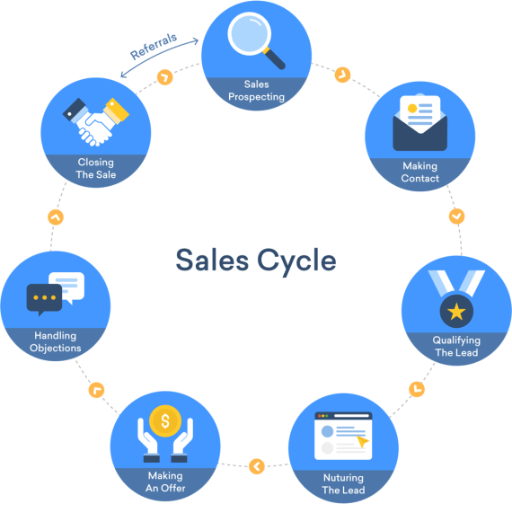
The collection of actions that an organization undertakes in selling to other businesses is referred to as the B2B sales process. This usually starts with a business identifying possible clients (prospecting) and gathering essential details. Following this, companies conduct outreach to engage with prospects, deliver expertly crafted presentations, and attend to any objections or issues they may have. After reaching an understanding or agreement with the client, the deal will be closed and the product/service will be provided, completing the process. Providing ample attention toward establishing connections and building a business’s value is crucial to effectively executing the B2B sales process.
Understanding the B2B Sales Process
Technological progress alongside changing buyer behaviors is driving rapid evolution in the B2B marketplace. Data from a study indicates that 68% of B2B buyers prefer doing independent research online prior to interacting with a sales rep. This shift underscores the purchasing power of digital content, including webinars, whitepapers, and case studies. Moreover, commercially available customer relationship management (CRM) tools and data analytics have enabled businesses to adopt tailored sales strategies, improving their chances of winning sales.
Research shows the average B2B sales cycle is between 4 to 7 months and usually involves several participants. Studies show that approximately 77% of B2B buyers claim the last purchase they made was complicated, requiring deep analysis across several vendors. Considerable emphasis is put on trust and providing a solution that is simple to understand and easy to confirm as beneficial. In addition, new trends like account-based marketing (ABM) are on the rise, with 87% of marketers claiming ABM has a better return on investment than traditional marketing.
To stay competitive, companies now have no choice but to incorporate automation and artificial intelligence (AI) into their sales processes. AI tools can offer predictive analytics, pinpoint potential high-value leads, and enhance outreach strategies. With a sophisticated understanding of buyer behavior, these technologies can be harnessed to improve the efficiency of the B2B sales lifecycle and outcomes.
Key Differences Between B2B and B2C Sales
Both B2B (business-to-business) and B2C (business-to-consumer) sales have distinctive differences on a more intricate level, such as the details in the decision-making process, sales cycles associated with each one, as well as how each type interacts with its customers. It’s critical to comprehend these distinctions to make approaches that appeal to the intended audience.
Decision-Making Approach
For B2B sales, the process is much more complex since it deals with multifaceted businesses which means it requires the approval of quite a number of people, for example, executives, managers, and procurement departments. Gartner projections reveal that, on average, a B2B purchase involves 6 to 10 decision makers, which subsequently causes delays in processes. In contrast, B2C sales focus on individual consumers who tend to make purchase decisions either emotionally or about their personal preferences as well as immediate needs.
Sales Cycle Duration
Generally, business-to-business sales tend to be characteristically longer to conclude when compared to business-to-customer processes. Research from CSO Insights estimates that businesses’ specialization sales cycles are between 3 to 9 months, depending on the industry. Customers need an in-depth understanding of products, tailored offerings, and explanations for return on investments (ROI). If the sale is for basic commodities, the purchase is nearly instantaneous which is characteristic of B2C sales, and more so, transactions are often faster than what is typical, especially during impulse purchases.
Building Relationships
In B2B sales, nurturing relationships is key. Sales representatives strive to maintain a long-lasting relationship with a client by addressing their needs and offering specific processes. CRMs, for example, help with managing their complex interactions. In contrast, B2C sales focus more on short interactions and relationships, which are more transactional. However, personalized experiences and brand loyalty programs are on the rise.
Transaction Volume and Value
The value of money spent on B2B deals is usually on the higher end, along with the breadth of the transaction. For example, a software vendor could sell enterprise solutions worth hundreds of thousands of dollars. Although B2C sales are usually of lesser value, the volume is much greater. This is exactly the case with retail-focused industries that strive for the broadest reach.
Marketing Approaches
B2B marketing focuses heavily on the content itself, with case studies, white papers, and thought leadership providing education and trust. Some statistics state that around 80% of B2B leads come from LinkedIn, showing the importance of professional networking in this sector. B2C, on the other hand, relies greatly on the emotional aspect of marketing as well as advertisement visually, especially on social media and sites like TikTok, Instagram, and YouTube.
Purchasing Drivers
In the business-to-business (B2B) context, buyers are motivated by return on investment (ROI), increased productivity, and other company results. They focus on quantifiable and objective information. On the other hand, consumers, in the business-to-consumer (B2C) setting, tend to be motivated by emotions like self-gratification, ease, and prevailing societal norms.
Businesses facing either corporate clients or individual shoppers can effectively tailor their strategies with the right data. Both segments of the market, B2B and B2C, are rapidly transforming with the introduction of new technologies and increasing consumer demands.
Steps in the B2B Sales Cycle
1. Prospecting and Lead Generation
A business garners leads through sophisticated tools available for use as sales navigators, Salesforce CRMs, or data-driven systems like ZoomInfo. With these tools, B2B marketers can identify organizations and strategize how best to approach the key decision makers. Current statistics indicate that there are approximately 68% of marketers make use of in-depth lead management technology to optimize their sales results.
2. Research and Qualification
Having identified potential leads, follow-up is done by analyzing a prospect’s business requirements, their spending allocation, and how ready they are to make decisions. There is a wealth of data that supports these statements. For example, Google indicates that 89% of B2B researchers specify that they search online as they go through the steps of purchasing an item. So, an effective strategy with accurate information is sure to guarantee directed engagement while saving a lot of resources.
3. Approach and Engagement
This step involves getting in touch with the qualified leads. Here, the prospect is contacted through customization via emails, social media, and even through cold calling. Customized addressing has proven to be a top performer according to research done recently, especially as it helps increase response rates by 30%. At this point, trust is built and values are shown, especially through tailored solutions offered.
4. Presentation and Demonstration
Following engagement, the next step is showcasing the service or product by presentation, demonstration, or proposal. This stage frequently includes live product demonstrations, case analyses, ROI modeling, or projections aligned with the solution’s expectations. Information from Google reveals that 71 percent of B2B buyers expect measurable outcomes to be referenced during online presentations.
5. Handling Objections and Negotiation
The negotiation phases of the sales cycle includes addressing the concern or objection from the prospect. Research shows that 60% of B2B buyers expect relevant information to be provided to address concerns. Use-case presentation, pricing model flexibility, and benefits over time usually lead to successful negotiations.
6. Closing the Deal
In this step, the aim is to reach and sign the agreement, ensuring all points of the terms from both parties are agreeable. An example of data analytics streamlining this phase is the use of e-signature services. Platforms such as DocuSign can shorten the average sales cycle by 40%. Providing ease-of-work technology during transactions improves the flow of deals.
7. Follow-up and Relationship Building
Enhancing clients’ sales experience entails mid to post-sale follow-ups and nurturing communication channels. These practices, accompanied by unparalleled customer service, enable sustained relationships with repeat clients, customer advocates, as well as better ROI. Statistically, retaining a customer is five times cheaper than acquiring a new one, which speaks volumes for the need for post-sale engagement.
Utilizing the data and technology tools, businesses are able to remain competitive alongside their rivals while reinforcing their connections with clients in an ever-changing market. Aligning their strategies with these steps can further assist in optimizing the B2B sales processes.
How Do B2B Sales Strategies Differ from B2C?
B2B sales strategies operate extremely differently from B2C in these ways:
In the Decision-Making Process: Various participants take part in the B2B sales dealing process which tends to slow down the decision-making process, while in B2C, sales are made to individual consumers, so decision-making is relatively faster.
In Relationship Building: B2B focuses on developing and maintaining relationships and trust with clients; therefore is slower, whereas B2C is much quicker since sales revolve around the attractiveness of products.
In Customization and Value: Tailoring B2B solutions to fit specific businesses is commonplace, but it is rare to see that in B2C businesses, which is the opposite, as the services and products offered are generic.
In Sales Volume and Price: B2B sales involve large monetary amounts. Otherwise, the smaller and more regular purchases would be categorized as B2C transactions.
In Communication Channels: There is a higher reliance on direct communication, like meetings or consultations, in B2B than in B2C where marketing attempts to reach as many people as possible.
These differences illustrate the various sales strategies and methods that need to be adopted in different contexts in order to be successful.
Crafting Effective Sales Strategies for B2B
Creating appropriate B2B sales strategies requires a thorough analysis of market developments, purchasing patterns and appropriate utilization of data-informed techniques. Below are some critically important strategies backed by recent data:
Emphasize Rapport Creation
Trust and relationships play a significant role in B2B sales. As per the last survey, 77% of B2B buyers said that their most recent purchase was cumbersome or complex, indicating the need for more Advanced Customer Engagement. Smooth communication, follow-ups, patience, personalization, and a deep understanding of your client make the difference. All of these help build rapport towards better relationships.
Make Use Of Technology And Data
Strategies related to B2B sales in modern times rely heavily on having an exact data set. Identifying specific opportunities, tracking progress, and creating new strategies can be achieved using CRM technologies and Data Analytics tools. More so, modern buying demands remote access mentioned by specific research from Gartner which states 70% of B2B buyers prefer remote digital buying journeys.
Enhance Tailored Marketing With Account-Based Marketing (ABM)
ABM is defined as an approach to high-value targeting enabled by proposed ideas for superior bespoke marketing and sales strategies. Companies employing ABM strategies increase of up to 171% in marketing ROI. Services offered must be aligned and aimed towards some specific decision makers and position customers identified in the service.
Focus on Content and Thought Leadership
B2B buyers often incorporate authoritative and applicable content into their buying journey. Documents such as white papers, case studies, webinars, and industry analysis reflect proficiency and cultivate a commanding image. HubSpot notes that 56% of B2B buyers consider the vendors who provide relevant content insights as their preferred suppliers.
Streamline Sales Activities
B2B sales are time sensitive. The use of automated systems for proposal generation, contract sorting, and follow-up can ease sales processes by saving time and reducing the friction associated with sales. Research shows that sales teams who utilize automation experience a 14.5% rise in productivity.
Keep Pace with Industry Changes
To succeed in B2B Sales requires a close association with current trends like sustainability, digital adoption, and a greater focus on diversity and inclusion is required. A McKinsey analysis offers that firms with sustainability components in their sales processes enjoy a 23% higher customer satisfaction rate than their counterparts.
Integrating these approaches with consistent monitoring of emerging trends will enable businesses to optimally approach B2B sales to remain competitive and accelerate growth.
Challenges in B2B Sales Compared to B2C Sales
B2B sales frequently present a different set of problems compared to B2C commerce. One of the most important aspects is the sales cycle. Gartner reports that B2B sales cycles seem to stretch indefinitely nowadays as customers spend a mere 17% of their purchase leviathan interacting with a sales representative. The rest of the time is spent on research or consults with company personnel, diluting the sales team’s chances to meaningfully impact decisions.
Another problem is the multi-tier complexity involved in B2B decision-making. Unlike B2C, where purchasing behavior is often solo, B2B purchases are made by several individuals from different departments. A survey done by Demand Gen Report claims that an average B2B buying group ranges from 6 to 10 decision makers, each with their individual priorities and concerns. This means that the sales process is even more complex because customized communication has to be designed for all the constituents.
B2B customers are now more demanding, a phenomenon observed in the last few years and this is attributed to the ever-evolving technology and the ocean of data available. Businesses now expect more precise information tailored specially for them, and delivered right in the middle of the sales discourse. McKinsey cites that 76% of B2B buyers feel annoyed at the sales encounter not being to their bespoke mark of relevance, hence, a need for powerful analytics in sales teams.
To conclude, trust and relationship building are critical in B2B transactions. Unlike B2C consumers who may purchase on a whim, B2B buyers tend to prefer spending with long-term value, reliability, transparency, and credibility. Edelman’s research indicates that 84% of B2B leaders consider trust as one of the essential components before a purchase decision is made.
To cope with challenges, strategically eliminating time to first response, using sophisticated analytics to create personalized interactions, and building solid trust-based relationships with clients are a few of the recommended approaches. Advanced solutions that address these issues alongside emerging complexities of B2B sales will allow the business to navigate and thrive in evolving environments.
Examples of Successful B2B Sales
Slack & IBM Partnership
For Slack, partnering with IBM serves as a textbook example of a successful B2B sales strategy based on understanding the customer’s needs. IBM moved its network of over 350,000 employees over to Slack’s platform. This was an example of how Slack’s product was able to scale to meet the needs of one of the biggest corporations in the world. This deal showed Slack’s ability to optimize communication systems for better operational efficiency on a business of that size and importance. The partnership was facilitated due to Slack’s ability to prove value and meet the demands posed by IBM.
HubSpot & Shopify Integration
As for HubSpot and Shopify, their integration serves as an example of effective collaboration for the benefit of both companies’ customers and product alignment. HubSpot was equipped with tools that enabled the CRM platform to integrate with the e-commerce functions of Shopify, which allowed both companies to enhance their offerings to serve their mutual customers better. HubSpot granted specialized CRM services to managers of Shopify stores while Shopify was able to expand HubSpot’s market reach into the e-commerce sector. This partnership which was created through leveraging a data-focused approach to improve user experience while exploring new growth markets, serves as an example of a win-win situation for everyone involved.
Microsoft & Coca-Cola Digital Transformation
The collaboration between Microsoft and Coca-Cola is an example of how B2B sales can drive digital transformation for major corporations. In a bid to enhance Operations and foster collaboration, Coca-Cola applied Microsoft’s solutions which comprise Microsoft 365, Teams, and Dynamics 365. As a result of the application of these tools, Coca-Cola was able to improve customer experience, gain operational efficiency to modernize business processes. This automation also proved Microsoft’s competency in problem-solving and scale effectiveness.
Amazon Web Services (AWS) & Netflix Collaboration
One more vivid instance of B2B triumph is the enduring partnership of AWS and Netflix. Netflix leverages AWS’s scalable cloud infrastructure to support its global content streaming platform, enabling seamless data handling and uninterrupted service delivery. AWS has been pivotal to Netflix’s uninterrupted leadership in the market because of the high availability, strong security, and technological innovation it provides.
These cases highlight the importance of custom solutions, creative integrations, and partnerships from the B2B sales perspective. The rapidly changing technological world requires a shift in focus towards understanding the client’s problem and combining individual approaches with technology to address it, resulting in a successful relationship.
What Makes a Successful B2B Sales Representative?

B2B Sales Representative or Business to Business Sales Representative is one of the most successful sales positions because they can communicate well, know the client’s industry which helps them tailor specific solutions to meet their needs which is achieved through active listening. A B2B Sales Representative faces a lot of challenges that they can act proactively using the tools and information that are bound through data. They can quickly adjust alongside the changes of every client as they are detail-oriented go-getters and adopt a consultative approach. These sales representatives understand the shifts in the market, and understand when to steer, pointing which direction while ensuring a non-infringed balance.
Essential Skills for B2B Sales Reps
To achieve the highest standards in today’s ever-evolving B2B sales environment, B2B sales representatives must continually develop new techniques based on trends and current research. Below, unlock skill resources to help you get a head start.
Digital CRM Mastery and Specialist Prospecting
Sales representatives should note that over 75% of B2B buyers do half of their research online before conducting sales calls (Cutler). Digital platforms have become a basic necessity. Reps need specialized knowledge of CRMs like Salesforce and HubSpot to capture relationships with customers and analyze clients’ data. This training enables them to customize communication, follow up repetitively, and achieve positive outcomes with prospects.
Making Research-Based Choices
With the development of technology, modern B2B sales deals are less negotiable. Shifts in technologies demand changes in strategies and approaches that assist organizations in understanding market fashions that make profit as key buyer trends. Making effective use of data should help organizations outperform their peers in sales; using data to drive decisions allows organizations to outperform their peers by up to 20%, according to McKinsey and Company. Tools like Google Analytics, Tableau and AI aid reps in smarter decision making.
Content Moderation Engagement
In the B2B sphere, content is proving to be ever more important in content-driven decisions. Demand Gen Report’s research shows that sales prospects have engaged with three to five different B2B content pieces before discussing with a sales agent. This means salespeople should include white papers, case studies, and product demos to educate the clients and nurture their interest throughout the funnel.
Sales, Empathy and Relationship Building
The human connection remains very vital in B2B sales. The most recent LinkedIn State of Sales Report showcased that 89% of the sales top sellers focused on building relationships. Active listening, empathy, and solutioning foster stronger and more durable bonds with clients.
Flexibility Applied and Constant Learning
New technologies and business priorities enhance change in B2B very rapidly. Sales reps have to be adaptable learners who work with new sales techniques, updated software tools, and market shifts. With microlearning, virtual workshops, and certification, business representatives can up their competencies and remain competitive.
With these skills, modern technology and data for insights, results-oriented strategy formulation that withstands relational testing is made possible for B2B sales representatives. A boom in results while fostering amazing yet timeless relationships becomes a guarantee.
Improving Sales Performance in B2B Sales
The contemporary B2B sales landscape leverages data as well as technology to empower sales teams to make better decisions and optimize their efforts. Recent surveys indicate that 73% of salespeople report using technology to increase their deal closure rates. Additionally, 50% of high-performing teams use predictive analytics extensively to gauge what clients will want.
The waving-a-magic-wand perception of sales productivity is enabled by customer relationship management (CRM) systems that permit record tracking, lead nurturing, and sales opportunity identification for automated and manual processes. Highly integrative tools such as Salesforce or HubSpot have rich modules that interface with other applications, thus improving workflow and productivity. Moreover, Artificial Intelligence in the form of conversation analytics or AI bots aids in collecting insight and automating mundane activities.
Personalization is yet another crucial element in enhancing performance. Data shows that a brand is more likely to attract 80% of customers if it offers personalized services. To thrive in the highly competitive B2B world, data must be leveraged to segment and market potential clients, draft tailored communication, and build relationships.
Lastly, facilitating an environment of ongoing development by conducting reviews and training with data tailored to specific goals makes certain that sales representatives remain responsive to market needs. Other benchmarks that help shape strategies and improve results include quantitative measurement of customer retention, growth rates, cost per acquisition, and the length of the sales cycle. Businesses can enhance their results by equipping their sales personnel with sophisticated tools and specialized guidance.
Training and Development for Sales Professionals
Investing in training and development for sales professionals is important for maintaining a competitive edge in today’s ever-changing marketplaces. In a recent study, businesses that implemented comprehensive training programs reported an average growth in net sales per employee of 50% over businesses that lacked such programs. In addition, ongoing training can foster employee retention; in a recent survey, 94% of employees stated that they are more likely to remain with an organization that seeks to develop their skills.
Current sales training programs utilize technological advancements to improve efficiency. AI-powered educational applications and sales enablement tools provide team members with access to personalized learning modules, real-time feedback, and even virtual role-plays. On-demand training caters to the professional’s schedule. As an example, in its 2023 Workforce Learning Report, LinkedIn acknowledged that 68% of workers prefer to learn through digital platforms while at work.
Important focus areas for development include communication, active listening, and data analysis. Also, sales teams should be trained on how to use customer relationship management (CRM) systems to identify and analyze customer behavioral trends and automate portions of the sales cycle. Data analytics in sales strategies can improve success rates as high as 125%, which makes this a modern training initiative every organization should adopt.
Moreover, developing mentorship programs allows for the skill acquisition and collaboration from more senior colleagues by junior sales professionals. The implementation of new training programs, combined with continuous performance evaluations, guarantees alignment with organizational objectives and market demands, which leads to enhanced overall sales figures.
How to Optimize the Sales Funnel in B2B?

To enhance the sales funnel in B2B, put your focus on these primary areas:
Precede the Lead Qualification Process with a Lead Generation Campaign
Lead generation should target your pre-defined ideal customer profile. Use stringent qualification processes to avoid wasting time on low-quality leads.
Improve Value Reinforcement Communication
Increasing trust can be accomplished with address resolution to customer needs via email campaign, webinars, personalized outreach, and one-on-one meetings that are tailored towards addressing customer concerns.
Integrate Marketing and Sales Functions
Vertical integration should also be enforced amongst the marketing and sales people. There is a need to share business intelligence data to enhance leads transitioning from one stage to the next in the funnel.
Make Use of Analytics
Using various analytical tools, monitor each stage of the funnel. Identify conversion barriers, bottlenecks, and devise new plans to refine.
Provide every level of the funnel with tailored content from adversarial case studies, demos, or ROI breakdowns designed to help enable better decision making.
Enhance Process Efficiency
To improve effectiveness, CRM tools, along with automation instruments can be employed.
Business sales funnels can be enhanced, thereby increasing increase conversion of leads and even overall revenue growth.
Lead Generation Techniques for B2B Companies
A good B2B company lead generation system merges digital platforms, insights, and personalization at an optimal level. Here are a few practices that have proven effective in securing quality leads and increasing conversions:
LinkedIn Leads All Other Social Services As a Professional Network
LinkedIn is the go-to social platform for B2B interactions. It has over 950 million users as of 2023 (Sellfy) which enables businesses to reach important contacts using filters such as industry, job title, region, and company size. Furthermore, aided by LinkedIn Sales Navigator, sales teams can conveniently pinpoint valuable prospects and create connections that can lead to mutually beneficial agreements in the future.
Need Focused Content Marketing Strategy
Numerous B2B marketers particularly stress the importance of content in the lead generation process. A study conducted by Demand Metric in 2022 revealed that 91% of B2B consumers regard content as a key component when making purchasing decisions. The marketing inclusion of white papers, ebooks, webinars, and case studies will not only encourage new customers to start using the business but also further establish brand authority within an industry. While producing any written material, make sure to boost website traffic for your firm by incorporating strong SEO strategies to maximize your content visibility through organic search results.
Enhance your Business Website and Landing Pages
Your website is most likely the first interaction your potential clients would have with your business. B2B companies need to create websites that are user-friendly, load quickly, and are mobile-responsive. Add specific CTAs and customize your landing pages to appeal to the specific buyer personas’ needs. A HubSpot report mentions that optimally designed landing pages can increase conversions from leads by as much as 300%.
Email Marketing Automation
Email is one of the most effective tools for B2B lead generation. It is important to remember that personalization matters more than any other factor; emails with personalized subject lines have a 26% higher chance of being opened. Use automated workflows in conjunction with email campaigns to help nurture your leads. There are tools available, like Mailchimp and ActiveCampaign which help in segmenting the audience for specific targeting.
Use of PPC Advertising
PPC ads and Google Ads drive intended traffic to your landing pages or website. Companies in B2B can reach prospects that are looking for answers using targeted high-intent keywords. Businesses, according to Statista, make about two dollars for every one dollar spent on Google Ads.
Account-Based Marketing (ABM)
ABM encompasses reaching out to certain high-value accounts with tailored marketing strategies. Merging ABM with tools like ZoomInfo or Demandbase helps businesses reveal the important decision-makers and messages that need to resolve their unique issues. A survey conducted in 2023 reported that companies leveraging ABM saw an increase of 70% in the deal sizes as compared to those who used traditional methods.
Use Data and Analytics Tools Like a Pro
With the use of Google Analytics, HubSpot CRM, or Salesforce, companies can monitor the movement and activity of leads, their approach to the website and campaigns, and overall campaign success. These outtakes aid in strategy refinement which ensures that filters put in place for the leads entering the sales funnel are of good quality.
Client Testimonials and Referrals
Encourage already satisfied customers to tell other people in their network about your business. Nielsen states that there is a 92% trust rate regarding recommendations given by peers. Enable the utilization of testimonials and case studies on websites to aid businesses in establishing credibility and trust with leads.
By applying the stated techniques, B2B companies can develop strong and flexible strategic plans that adapt easily to changes in the market and shifts in buyer behavior.
Enhancing the Customer Experience in B2B Sales
Providing a wonderful customer experience (CX) is now regarded as a fundamental component in B2B sales. As reported in the recent McKinsey study, B2B companies exhibiting excellent CX outperform their counterparts by 10-15% in revenue growth. To improve customer experience in B2B sales, companies need to focus on personalization, digital optimization, and ensuring value delivery at every interaction.
Defining Personalization and Customer Understanding
B2B customers are no different from B2C clients: they expect the same tailored interaction. Companies can derive valuable insights from the data of clients with the aid of analytics and AI. Additionally, a Google search study states that 70% of B2B buyers would appreciate offers specially tailored to them. CRM tools, along with marketing automation tools, provide useful account customer insights, enabling the creation of customized communication.
Optimizing the Digital Experience
It is important to provide a smooth digital experience since a majority of B2B buyers significantly prepare themselves beforehand. According to Google, 68% of B2B buyers prefer researching on their own through white papers, case studies, and video guides before contacting a representative. Companies need to work towards ensuring that their websites are user-friendly and that there is easy navigation to high-quality resources. Most importantly, the removal of barriers through mobile optimization, quick loading times, and hassle-free navigation is critical.
Creating Value Beyond the Transaction
The sales cycle in B2B transactions goes beyond the initial purchase. This places a high importance on post-sale support and relationship management. Statista claims that 76% of B2B buyers prefer suppliers who act as strategic partners towards solving recurring problems. The provision of timely account management and training webinars aids in trust allotment from clients, ensuring satisfaction. Most importantly, adopting customer feedback loops enables continuous improvement for the business.
The effective implementation of these strategies allows sellers to get closer to fulfilling the needs of their clients which promotes loyalty and sustainable growth. By today’s standards, a strong customer-focused strategy framework has to include the combination of proactive engagement, advanced personalization, and digitization to help in meeting buying expectations.
Measuring Sales Performance Effectively
Evaluating sales performance contributes to the success of an organization in a significant way. Effective sales measurement goes beyond merely assessing a team’s current success; it also determines the ways a team could improve and grow. To obtain effective results, a combination of KPIs, advanced tools, actionable strategies, and data are needed to construct a more comprehensive picture.
Important Parameters within Sales Performance Evaluation
Revenue Growth: Tracking how revenue grows over the years offers insight into the effectiveness of the sales strategies employed.
Conversion Rates: The proportion of leads turned into customers is an important factor indicating the efficiency of sales and effectiveness of the sales funnel.
Customer Acquisition Cost (CAC): It is equally important to know how much it’s costing an organization to acquire a new customer for effective budget management.
Customer Lifetime Value (CLV): The metric measures the total value the customer can potentially add over the duration of their relationship with the business, as opposed to the cost incurred for acquiring them to guarantee business growth.
Sales Cycle Length: Looking at the time taken to close a deal helps in determining the constraints within the sales process that have to be optimized.
Using Technology to Measure Performance
Today’s sales teams are leveraging technology to gain deeper insights and optimize tracking of key performance indicators (KPIs). Tools such as Salesforce, HubSpot and Zoho CRM offer sophisticated rival dashboards and analytics that track in real-time metrics related to customers and their behavior. With the help of AI analytics, salespeople can also make anticipatory decisions on trends, customize strategies, and pinpoint top performers.
Sales productivity is bound to increase between 5% to 10% for companies that implement data-driven sales processes, as noted by a McKinsey & Company report. Google’s studies underscored the value of AI and machine learning integration into sales tools, especially in helping with bespoke targeting, precision forecasting, and customer acquisition.
Supporting Performance Metrics for Groups
Visual aids are an innovative method of conveying and communicating performance benchmarks and sales data. Cross-functional teams can streamline business performance to achieve target goals with the implementation of intuitive dashboards integrated with advanced interactive charts, heatmaps, and real-time updates. Such technological advancements help foster better decision-making and cultivate a culture of impact-focused change within teams.
In the present fast-paced business world, optimization of sales performance and improvement measurement can be achieved by quantifying key metrics, utilizing the latest technology, and clear visualization methods.
What Role Do Sales Teams Play in B2B Sales?

B2B sales interactions are mostly conducted through Bangarem’s sales staff, who interface with clients, develop contacts, and appreciate bespoke requirements formulated through engagements. Sales teams are essentially the intermediary link between two companies, which necessitates smooth and trustworthy interactions throughout the entire selling process. By identifying new sales opportunities, qualifying leads, and providing appropriate counsel, the sales staff contributes to the long-term revenues and sustainable relationships of the company. This is only achievable in cutthroat competitive markets with businesses that take the time to understand their customers and know how to plan and administer their resources in a way that meets business requirements.
Building a Strong Sales Team for B2B
A successful B2B sales team requires strong planning around the hiring, onboarding, training, and technology-empowered tools utilized to build the team. As the industry evolves, it is being reported that successful B2B sales teams possess the following core characteristics:
Detailed Roles Assignment
The report quantifies that sales team members’ role specialization allows them to center their account management skills, lead generation activities, or deal closing processes on the few prescribed activities they perform. This enables a level of productivity increase of about 20% according to a McKinsey 2023 report.
Sales Training
Sales training programs should be constantly updated and evolving with the industry. New techniques focused on data and insight analysis, communications skills development, and CRM tools require a training emphasis shift, as illustrated by HBR boosting the productivity of sales by 15%.
Utilization Of Technology: AI-Driven CRM Systems and Sales Dashboard
The powerful features offered by AI in prospect leaderboard scoring tend to attract the attention of advanced B2B sales teams. CRM software epitomizes the astute businessman, where 2022 statistics by Gartner show that 75% of sales organizations that adopted AI technology in customer engagement and deal closure rate improved.
Data-Driven Approach in Decision Making
The most successful teams utilize data at every step, right from selecting the relevant market to strategizing pricing models. For example, Forrester reports that data-driven companies are acquiring new customers at a rate 23 times higher when compared to their competitors.
Strong Leadership along with Collaboration
A well-performing B2B sales team relies on collaborative leadership, which promotes active communication alongside responsive listening. A Gallup study shows that companies with engaged teams experience a 21% increase in profit.
Emphasis on Building Long-Term Relationships
Effective B2B sales go beyond selling; they concentrate on long-term relationships and trust with the client. Companies that focus on customer retention report 25% more revenue growth, according to Deloitte.
Integration of modern technologies, skill training, and systematic approaches helps nurture sales teams that are not only competitive in the B2B market but also agile enough to exceed client expectations in the company’s hands.
Collaboration Between Sales and Marketing in B2B
Synergistic collaboration between sales and marketing departments in the B2B sector is essential in amplifying revenue and meeting organizational objectives. Recent Google data showcases that sales and marketing teams working in sync are able to increase revenue by as much as 34% and hold 36% more customers. This collaboration starts from unified goals and metrics designed for both teams, such as lead generation, nurturing, and customer acquisition.
Collaboration is enabled by modern tools and technologies that are able to support this function. An example is the Customer Relationship Management (CRM) systems and marketing automation tools that facilitate real-time data sharing that gives insights into customer behavior and preferences. Both marketers and sales gain from these insights, with marketers creating targeted campaigns for potential buyers and sales personnel personalizing outreach efforts based on detailed customer profiles.
Also, incorporating Account-Based Marketing (ABM) strategies shifts the collaborative focus. Tailored ABM content assists marketers in engaging key decision makers, while sales provide marketers with the high-value accounts needed for effective targeting. A MarketingProfs study states that companies using ABM witness a 171% increase in average annual contract value.
Aligning an organization around a common goal also requires active and continuous two-way communication. Weekly check-in meetings, common access to interactive analytics dashboards, and SLAs (Service Level Agreements) ensure accountability while meeting regarding coordination on business functions, also aligning performance with the customer’s expectations.
Clear B2B growth silos by integrating advanced organizational collaboration strategies and marketing-driven data enable sales and marketing teams tailored automation to construct an effortless transition journey for customers.
Overcoming Common Sales Challenges in B2B
B2B sales teams encounter distinct problems that need highly refined approaches and transformed strategies to remain marketable. One of the key challenges is the added intricacy of the buyer’s decision-making. Each buying group within B2B comprises 6 to 10 decision-makers, as per Gartner, which means adopting various viewpoints and priorities from different individuals. Such a scenario can frequently increase the length of the sales cycle or put the deal at risk of stagnation.
Another notable issue is the growing preference for online and self-service purchasing. McKinsey & Company states, 77% of B2B buyers prefer dealing with sales representatives at a distance as opposed to face-to-face. This compels sales teams to strategically deploy AI-augmented CRM systems and marketing automation to capture and nurture prospects in the broader digital ecosystem.
Alongside maintaining lead quality and quantity, the issue persists. HubSpot reports that 61% of marketers consider generating traffic and leads their primary obstacle. To overcome this, exceptional B2B sales teams optimize sales and marketing alignment down to the most granular level, integrating intent data with account-based marketing (ABM) approaches that focus on key decision makers of the target accounts.
Lastly, global market pressures such as economic uncertainty further complicate pricing negotiations. As seen in the case studies, demonstrating ROI to buyers and building trust throughout the sales process by leveraging dynamic pricing models and value-based selling has been helpful. B2B sellers can overcome these challenges by adopting focused, targeted, and data-driven approaches that transform growth hurdles into opportunities.
Reference Sources
- Artificial Intelligence in B2B Sales: Impact on the Sales Process
In this paper, the author analyzes the application of AI in B2B sales processes with particular emphasis placed on digital sales.
- Contribution of Artificial Intelligence in B2B Sales: A Danfoss Case Study
This case study analyzes the role of AI technology in the sales processes of B2B companies, using Danfoss as an illustrative case.
- A Healthy Digital Image: Exploring Its Impact on B2B Sales Lead Generation in a Professional Social Network
This study investigates the impact of an organization’s online presence on B2B sales lead generation.
Frequently Asked Questions (FAQs)
Q: What is a B2B sale and how does it differ from B2C sales?
A: A B2B sale involves transactions between two businesses, such as a manufacturer selling to a wholesaler. In contrast, B2C sales involve selling directly to consumers. The B2B sales process often has a longer sales cycle and involves more stakeholders in the decision-making process compared to B2C sales.
Q: What are some effective B2B sales strategies?
A: Effective B2B sales strategies include building strong relationships with potential customers, providing tailored solutions, utilizing data-driven sales approaches, and maintaining a robust sales funnel to track and manage leads. Sales teams should focus on understanding the specific needs of B2B buyers and aligning their product or service offerings accordingly.
Q: How does the B2B sales process typically work?
A: The B2B sales process typically involves several stages: lead generation, qualification, presentation, negotiation, and closing. This process often requires collaboration between sales and marketing teams to ensure a seamless transition from potential leads to actual customers. Sales professionals must be adept at guiding B2B buyers through each stage of the sales cycle.
Q: What challenges do sales representatives face in B2B sales?
A: Sales representatives in B2B sales often face challenges such as longer sales cycles, the need to influence multiple decision-makers, and the complexity of tailoring solutions to meet specific business needs. Additionally, staying competitive in a crowded market and maintaining high sales performance are ongoing challenges for many B2B sales reps.
Q: Can you provide examples of B2B sales?
A: Examples of B2B sales include a software company selling enterprise solutions to other businesses, a manufacturer supplying parts to an automotive company, and a marketing agency providing services to a retail chain. These transactions typically involve large-scale purchases and long-term contracts.
Q: What is the role of a B2B sales representative?
A: A B2B sales representative is responsible for identifying potential customers, understanding their business needs, and offering solutions that align with their goals. They manage the sales cycle from initial contact through closing, often working closely with other sales and marketing teams to optimize sales performance and enhance customer experience.
Q: How can businesses improve their B2B sales performance?
A: Businesses can improve their B2B sales performance by investing in sales training, leveraging technology for better sales metrics tracking, and fostering collaboration between sales and marketing teams. Additionally, refining the sales approach to better address the evolving needs of B2B buyers and enhancing customer experience can lead to better sales outcomes.
Q: What is the first step in the B2B sales process?
A: The first step in the B2B sales process is lead generation. This involves identifying and attracting potential customers who may need the product or service being offered. Successful lead generation strategies often involve a combination of marketing efforts, networking, and research to target the right audience.
Q: How do sales teams manage the longer sales cycle typical in B2B sales?
A: Sales teams manage longer sales cycles by maintaining regular communication with potential customers, nurturing relationships over time, and using CRM tools to track interactions and progress. A well-defined sales funnel helps in managing leads effectively and ensuring that sales reps can prioritize their efforts on the most promising opportunities.


