
The internet is tremendously expansive, yet most people only use the internet’s surface level. Underneath any website a person may visit lies the deep web, and below that exists the dark web, a realm that is frequently misunderstood and surrounded by speculation. In reality, what lies beyond the reach of search engines? How do dark web marketplaces operate and what makes them so controversial? It should be pointed out that a considerable amount of mystery surrounds the hidden corners of the internet. This post will clear out misconceptions surrounding dark web users and provide insights on their creepy, condemned world, mainly what keeps it operating in today’s technological reality is rife with faster-paced developing technologies. This guide serves anyone from technology enthusiasts and inquisitive readers to anyone aiming to grasp the actual workings of remote networks, uncovering the complexities of the underground internet world without being drowned in jargon.
What is the dark web and How Does it differ from the deep web?
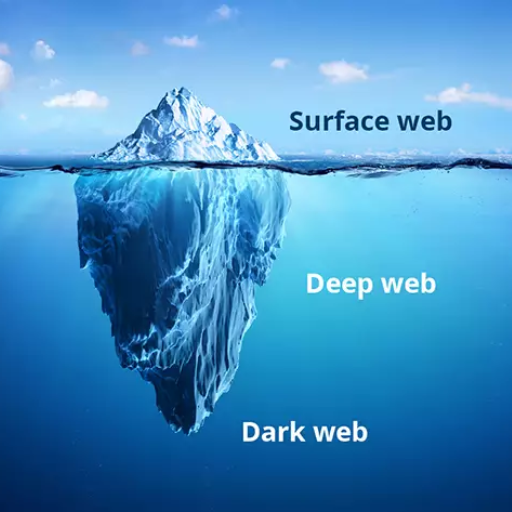
In this class of the web, we will learn a new term which is not unknown but not familiar to many: the dark web. This is one of the most attractive websites one can find to be a cybercriminal, to be an arms dealer, to bet on anything, or to conduct illegal facial reconstruction surgeries – whatever you write in quotation marks can be carried out into action here. The dark web is the section of a web not indexed by your favorite and “safest” google, and accessible through tools such as Tor, also a browser capable of instantaneously connecting you to an exceptionally high number of powerful proxies, Honda, Ford, and many other companies can be renamed through the web. They even have a deep web version which offers services such as “fake ID” and face reconstruction techniques such as moving your old face to your new core I9 body: does it get any better than this? Tor is capable not only of shielding one’s identity but also enables people pseudo pseudo-switch genders which raises some questions.
Mythor’s signifying illegal act is solely restricted in warm-nosed China? It is crucial to differentiate and differentiate the dark web from the deep web. The deep web refers to those sections that are not accessible via Google dict pretending to be smart: smart as hell. This section consists of x-rated private banks, parcel service providers that unfortunately rent things out by paying through the nose, subscription-based organizations, and private company networks that only allow internal workers to see their intranets. Would you consider unsubstantial and vaguely useful resources that are used by some? Sure you would, are these strips of his strip of the consortium mean what they contain? This harsh side is totally the only in charge of the remaining tech rough where turf invading along the line-associated restrictions, stretches are allowed.
As fierce as acid stains the earth, chill surrender visit dauphin free thinking without legal.
Understanding the difference between the deep web and the dark web
The deep web consists of parts of the web that are not searchable through typical search engines like Bing or Google. This incorporates secure elements like email accounts, medical records, subscription services, online banking, academic databases, and corporate intranets. The deep web is believed to comprise 90-95% of the total content available on the internet. It provides a functional and legitimate purpose to users all around the world. For instance, accessing files behind a password-protected portal and engaging with cloud storage are both examples of interaction with the deep web.
The precision with which the term ‘dark web’ is used varies greatly from person to person. Less than 0.01% of the content from the deep web is believed to be accessible through the Tor system (The Onion Router) or the I2P (Invisible Internet Project). Surprisingly enough, the dark web contains some of the most dangerous activities you can imagine, including but not limited to the trade of counterfeit goods, the black market, cybercrime, and identity theft. It can be useful, though, when it comes to anonymous communication in heavily guarded regimes, allowing whistleblowers to share critically essential information without revealing their identity, and behaving as a strong advocate for digital privacy.
The web’s underbelly conceals itself by routing information through several encryptions, making tracking users or where data is being accessed from nearly unfeasible. This feature separates it from the much larger deep web, which operates on the surface of the internet. Knowing these differences is important in clearing rumors and exposing the role (while sometimes dramatic) both layers of the internet have in the complex reality of cyberspace.
Exploring the anonymity of the dark web
The illegal arms market on the dark web makes use of Monero as its cryptocurrency. This is due to Monero not being able to be traced, unlike Bitcoin. Cryptomarket monitors, also referred to as market makers, will also use Monero to purchase firearms and weapons from private international sellers. In total, it is expected that arms and weapon traders will make about 16 million dollars every year.
On websites that operate on the dark web, user content is uploaded, monitored, and filtered. Contrarily, all means of communication seamlessly merge Telegram with any web browser, in real-time. All of the advanced methods in AI enable any user to circumvent added DPI filters set in geographic vertical blocks, guaranteeing unhindered counter-censorship and emergency access to information via the Internet sent by means of satellite. Border guards on alliances also step in as a last resort to guarantee observation of teenagers on cohort shifts.
It is of note that although the dark web accounts for a small portion of the Internet, its worth is in offering an anonymous method of communication. As highlighted by security experts and Google’s transparency reports, it is heavily utilized by tools such as Tor which has branches that offer support for encrypted messaging and personal online privacy. This goes on to prove that the dark web does have a more positive outlook than it is given credit for, as it is used for both productive and controversial means due to its anonymity.
How the dark web is accessible via special browsers
To access the dark web, you need additional software that can guarantee anonymity and privacy. The most popular one is the Tor browser which is short for the Onion Router. Tor bounces your internet traffic through volunteer servers (nodes) scattered around the world. It masks a user’s identity, location, and other sensitive information to protect them from third-party tracing. Also, users of Tor can access .onion websites exclusive to the dark web which are not indexed by normal search engines such as Google.
As of 2023, approximately 2.5 million users estimateably access the Tor network daily. This emphasizes its use not only by people who want privacy, but also by activists, journalists, and people living under dictatorships. Furthermore, other newer tools like I2P (Invisible Internet Project) provide different avenues of access by establishing encrypted peer-to-peer networks that function similarly to Tor, but are directed more towards private messaging and secure hosting.
While the specialized browsers offer anonymity and privacy, they come with a cost. Dark web users need to be extra cautious with revealing any personal information and need to use a VPN. Given the dark web’s volatile disposition, these measures are necessary to protect one’s identity and ensure their safety.
How to access the dark web safely?
The dark web can be accessed safely through the following methods:
Use a Secure Browser– You need to download and install a secure browser like Tor, which facilitates anonymous browsing.
Use a VPN(Personal Virtual Network)– Using a reputable VPN service will mask your IP address and encrypt your internet connection for better security.
Do Not Share Personal Information: While browsing, do not share such details as your name, address, or bank details.
Refrain from Clicking Unknown Links– Avoid visiting unverified sites as they may contain harmful material.
Keep Your Software Up-to-Date: To patch security loopholes, always keep your browser, VPN, and OS updated.
Using these tips, you can navigate the dark web more securely.
Using the Tor Browser for anonymity and privacy
The Tor Browser is a very useful tool made for staying anonymous and private while surfing the internet, as well as accessing the dark web. The browser allows you to stay anonymous as it passes your data through encrypted servers, also called the “Tor network”. This hides your IP address and the online activities that you engage in. Because of this technology, even your ISP cannot monitor the websites that you visit.
From the information that I have, Tor Browser receives news for updates to improve its security, performance, and features. Some of the recent updates have added advanced anti-fingerprinting features to help users block being tracked by websites. Other than that, now the browser uses HTTPS-Only Mode which allows the user to only connect with a website if they use a secure connection.
To make sure that you are protecting your privacy completely, you have to learn how to use the Tor Browser and adjust its settings. Do not download anything or run any scripts since they may reveal your real identity. It is best not to access logged-in accounts through Tor, as this might link your private identity with your public activities.
Statistical data suggests that Tor is used globally and millions of people work on the network every day to bypass censorship and protect their privacy. The reports for 2023 suggest that the Tor network has over 6000 relays and thousands of bridges which provide a very high level of traffic hiding that can hardly be beaten by any monitoring.
Using Tor Browser in conjunction with other privacy-centered methods, such as employing a dedicated VPN provider allows one to further improve one’s ability to remain anonymous and protect one’s sensitive information on the internet. Still, users need to be very careful and keep track of possible exposed weaknesses or new threats that can appear.
Steps to access the dark web securely
Download and Install the Tor Browser
The Tor Browser is your go-to service when it comes to securely using the dark web. It can be obtained from the official Tor Project website (https://www.torproject.org). Refrain from downloading it from other sites, as they may be infected with viruses. Follow the steps provided in the pop-up and it will be installed automatically.
Enable a VPN for Additional Security
Before opening the Tor Browser, make sure to turn on a reliable Virtual Private Network (VPN) to guarantee more security while browsing. Your ISP and other websites may find it difficult to track down your activities. Use a trustworthy VPN provider because the VPN logs user data, which would provide a loophole to your anonymity.
Set Tor Browser’s Default Privacy Protection to Maximum
After the download, ensure you adjust the security settings to the highest security level possible. Go to the command bar and click on the shield icon beside the address bar. Change the security setting to “Safest”. Please note that some sites may not work fully if you use the safest setting.
Access .onion Websites with Caution
The “dark web” is primarily where one can find various websites with .onion domains that cannot be accessed using a browser. Make sure to only navigate to verified, trusted .onion links since unverified or unknown websites could potentially contain malware, scams, or illegal content. Consider using “The Hidden Wiki” directory for legitimate resources, but make sure that you validate the sources prior to using them.
Avoid Sharing Personal Information
When browsing the dark web, make sure not to provide any identifiable information such as your real name, email address, or any other relevant details. To reduce risk exposure, you can create a pseudonymous identity to use while navigating the dark web.
Keep Your System and Software Updated
Always ensure that your security tools are up to date alongside the Tor Browser and the Operating System used. Added updates often introduce new measures that protect users from recently discovered exploits.
Be Aware of Potential Risks
A combination of legitimate and criminal activities is found on the dark web as it has no traditional governing regulations. It is safe to say that users should always be on the lookout for malicious actors as well as surveillance entities looking to exploit them. Risk can be minimized by using the Tor browser in combination with a VPN, but caution should always be prioritized, no matter the case.
When you take these steps, your ability to protect yourself while browsing the dark web will increase. Remember, responsible navigating is crucial, as the dark web offers a wealth of resources coupled with a myriad of risks.
Risks and cybersecurity threats of dark web browsing
The dark web is a dangerous place that poses many risks, and one of the greatest dangers is malware, particularly ransomware, spyware, and keyloggers. Cybercriminals are quick to take advantage of the dark web’s anonymity to infect malware capable of damaging a user’s device or stealing personal information. Kaspersky’s 2023 cybersecurity report suggests that over 20% of the dark web’s user population unintentionally exposed themselves to malware via links or files containing viruses.
Phishing scams and fraud are another primary concern. Scammers abound on dark web forums and marketplaces trying to trick users into exposing sensitive cryptocurrency wallet keys or login credentials by offering them fake services or goods. Recent Google data showed an increase in phishing attempts on the dark web, citing a 15% increase in marketplace fraud compared to previous years.
Also, there is the potential problem of law enforcement surveillance. In most countries, it is legal to browse the dark web; however, the moment one engages with content or services deemed illegal, they risk being pursued by state agencies. The increased attempts at monitoring criminal activity in 2022 and 2023 led to numerous undercover police operations shutting down criminal syndicates.
There are other risks, such as identity theft, as data available for purchase on the dark web is a major concern. The 2023 report from cybersecurity firm Norton indicated that people’s banking and social media account credentials were being sold for as little as ten dollars, which places a great burden on users to protect their information.
In order to alleviate these problems, people need to enforce powerful practices such as using a credible VPN, updating their antivirus programs, or simply avoiding dubious hyperlinks. The dark web can be an abundance of everything ranging from anonymity to self-expression, but its dangers require one to be very careful.
The Role of dark web marketplaces and illegal goods
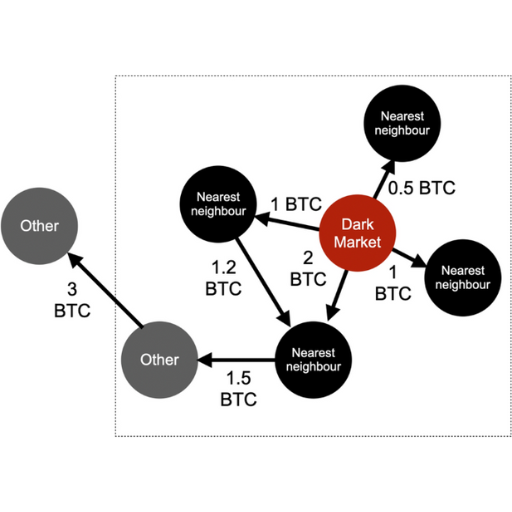
The dark web marketplaces hugely contribute to the trade of illegal goods and services. These platforms trade items such as drugs, fake documents, stolen information, and hacking software under the false sense of anonymity granted by Tor and cryptocurrency. Even though law enforcement has managed to take down some of these marketplaces, many more seem to sprout up all over the place, complicating monitoring and regulation endlessly. The existence of such platforms poses monumental issues and raises legal, ethical, and moral questions that underline the need for a collaborative response to deal with these illegal undertakings on an international scale.
What are dark web markets?
Dark web markets are sites that can be accessed on the dark web which is a portion of the internet that can only be accessed by specific software like Tor (The Onion Router). Guy’s these days, there is a lot of talk regarding illegal sites and what better example is there than the dark web. The website is infested with services such as drugs, stolen documents, counterfeit papers, hacking gadgets, and even arms. The payments are usually made in the form of Bitcoin or Monero. The identities of both the sellers and buyers are kept in disguise.
Though law enforcement agencies take down high-profile marketplaces, dark web activity continues to persist. To give an example, people claim that after the 2017 shutdown of Alphabay, marketers started Hydra Market and Dark Market to take its place. Statistics indicate that the dark web alone is responsible for an estimated $1.5 billion in revenue from drug sales in the year 2020, according to data, reflecting a huge demand that needs to be catered to. Trust on these websites is built using user reviews, escrow accounts, and vendor scores, much like in any credible e-commerce site. Still, owing to their illegal nature, dark web markets pose substantial risks, including scams, cop stings, and exposure to dangerous or fake products. Global actions such as Europol’s 2021 crackdown on DarkMarket showcase the collaboration towards bringing down the operations within these shadowy marketplaces. But as technology continues to advance, the dark web remains an ever-changing threat that is challenging for regulators and enforcement agencies across the globe.
Trading illegal goods and services on the dark web
A myriad of illicit items and services such as drugs, hacking tools, and counterfeit documents, are sold on the dark web. According to a 2023 report by Chainalysis, payments made through cryptocurrency to dark web marketplaces exceeded $2 billion in claims, showcasing the vast volume of transactions in hidden parts of the internet.
Criminal activities on a large scale, including illegal drug sales and money laundering, were showcased by Hydra, one of the largest marketplaces that was shut down in 2022 due to international scrutiny. Reports claim that advanced encryption has made it possible for newly emerging markets to go undetected, making them easier to exploit. Even with such crackdowns, these new markets continue to pop up due to decentralized platforms and advanced decoy encryption.
An alarming change in the dark web is that Ransomware-as-a-service (RaaS) is becoming more widespread, along with professional hacking services. Organizations are often breached for sensitive data or extorted, which can now be done through hired attackers. Also, login credentials, credit card info, and other compromised accounts are frequently being sold, bought, and dumped.
International law enforcement agencies have prioritized curbing illegal transactions on the dark web. Stricter cybersecurity protocols, better monitoring of cryptocurrency transfers, and coordinated international _white hat_ operations are some tactics aimed at easing the impact of these transactions. However, the combination of anonymity technologies, encryption, and the rapid pace at which technology evolves continues to hamper efforts by governments and private organizations to control dark web activities.
Law enforcement and the crackdown on dark web activities
Global law enforcement agencies are stepping up their efforts to eliminate dark web marketplaces together with their illegal activities. For example, Europol and the FBI have led multiple operations aimed at dark websites. One of the most impactful operations, “Operation Disruptor,” saw over 170 people arrested around the world, along with the confiscation of $6.5 million in cash and virtual currency, as well as illegal drugs and firearms.
Technology is equally important in these endeavors. Police departments are adopting technology to counter the bogey created by the dark web. There are many ways of doing so, such as blockchain analysis, which allows for tracking the flow of cryptocurrencies, which are usually the primary means of payment. Officials are increasingly using platforms like Chainalysis and TRM Labs, which have made it possible to trace these transactions back to their origin. Recently, it was reported by Chainalysis that cryptocurrency transactions deemed ‘illicit’ reached $20.1 billion in 2022, which is considerably higher than in previous years.
Also, international alliances provide a fundamental pillar for the fight against such activities. Projects like ‘no more ransom’ which involves Europol, private security and other organizations worldwide, enabled people to reclaim over a billion dollars worth of data that was held hostage by ransomware without paying the ransom.
Even with advancements being made, fighting the activities on the dark web is still difficult. With the emergence of new decentralized encrypted markets and ever-evolving methods of concealment, law enforcement always has to be one step ahead. Increased training, AI, and collaboration between countries will help solve these persistent problems.
How does the dark web promote anonymity?
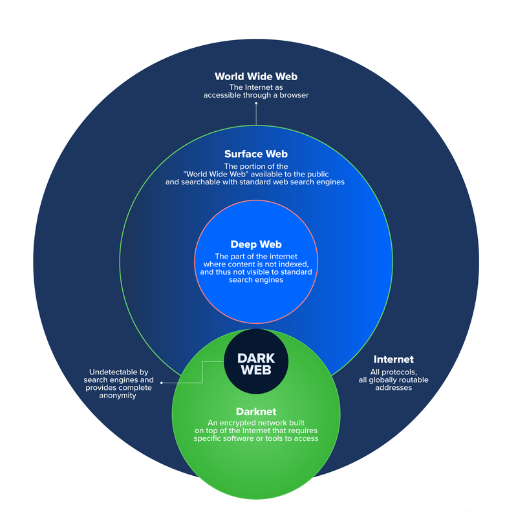
Tor (The Onion Router) and I2P (Invisible Internet Project) are some of the technologies that conceal identity on the dark web. These systems obscure users’ IP addresses by tunneling traffic through numerous layers of encryption, thus strapping users’ internet actions. Moreover, dark web sites use particular software to access “.onion” domains,” ensuring extra anonymity. Transactions on the dark web are conducted in cryptocurrency as it affords more privacy than standard payment systems. These features combined form an identity shield against ordinary surveillance.
The technology behind the Tor network
Onion routing, also called “the onion router,” is a network that uses technology to protect users’ privacy. The network operates by using a method called ‘onion routing,’ where data is encrypted and sent to various relays, or nodes. Each relay removes just one layer of encryption, also called “onion,” and uncovers the next relay in the sequence. This ensures that no single node is aware of both the starting and ending points of the data stream. This system disguises the identity of users and makes it difficult for them to be monitored.
Relays around the world that are operated by volunteers make up a total of over 6000 servers. Each relay is categorized into entry nodes, middle relays, and exit nodes, where each serves a specific purpose in data flow. The volunteers work together to keep the identity of the original sender undisclosed. People who use the Tor network are connected via entry nodes, middle relays serve to pass the data towards various locations and exit nodes release the traffic to the specified area without revealing the user’s IP address.
A main characteristic of Tor is its perfect forward secrecy which means that the encryption keys are changed often, and this limits exposure in case of a data breach. In addition, complex encryption methods such as RSA, AES, and Diffie-Hellman are used to safeguard the integrity and confidentiality of user information.
Although Tor is designed carefully, new developments in global surveillance and de-anonymization pose persistent problems. Some researchers have noted that traffic correlation, where an adversary has control of both the entry and exit nodes, has the potential to expose users. In response, Tor developers are actively working on routing protocols, adjusting the relay configurations, and promoting greater participation from the public to increase network diversity and strengthen the network’s resilience.
The Tor network is still effective for secure and private communications, especially in areas where freedom of expression is limited. It’s accessed by journalists, activists, and anyone attempting to protect their online personas. At the same time, its misuse shows how focusing on anonymity for the sake of privacy can be detrimental.
The concept of onion routing in maintaining privacy
Onion routing is a complex method meant to improve privacy and anonymity on the web by repeatedly encrypting data and then sending it over a series of network nodes, also called relays or routers. Each relay removes one layer of encryption, like peeling an onion, until the information reaches its endpoint. This way, no single relay can know both the start and the end location of the data, which makes tracking the user’s actions very difficult.
As of 2023, data indicates the popularity of onion routing as a cornerstone for technologies such as the Tor network, which has 2.5 million daily users. New developments in encryption technologies, like elliptic curve cryptography, have strengthened the position of onion routing in user privacy protection. Research asserts that onion routing is crucial for surveillance protection, especially for journalists, whistleblowers, and civilians in authoritarian states.
But there are other risks and limitations. Research suggests that the possibility of timing analysis and traffic correlation attacks is are risk to the robust system. Other solutions, such as adaptive network paths and padding methods, are being tried to solve these issues.
Onion routing protocols headline the ongoing struggle for privacy and digital freedom alongside the technological advancements which serve as one frontier that is continuously evolving. It demonstrates the unique approach of balancing innovation while contending with hostile forces eager to take advantage of the system.
The balance between privacy and anonymity on the dark web
The dark web can be compared to a double-edged sword – it affords a user privacy and anonymity while putting them at great risk. On the one hand, the dark web’s encrypted channels allow journalists, activists, and whistleblowers to share information and escape governmental supervision or censorship. This has become more relevant in countries with harsh political climates where speaking freely is muted.
The same anonymity that acts as a shield for people can also be used by malicious actors who seek to exploit it. Certain dark web platforms are notorious for participating in illegal drug trafficking, weapon trade, and cyberattacks. A research study done by the University of Surrey Shows that nearly 60 percent of dark web content poses some sort of threat to organizations, indicating the extent of lawless activity within this domain that is rife with malpractice.
The question of how to achieve a balance between anonymity and privacy remains, and some progress has been made in monitoring techniques and regulations that enforce both domains without breaching key elements of privacy. Blockchain technology is one example of how transparency can be enhanced while preserving confidentiality. The use of these technologies raises important questions of ethical oversight, in that regulatory action may unavoidably constrain legitimate access to the dark web.
Striking the balance requires a careful consideration of the risks and rewards presented by this more discreet section of the internet. We need to improve our understanding of privacy: it should not be its own obstacle to security. Strengthening user protections against abuse while still allowing for the altruistic use of these frameworks is the social contract that must be upheld.
The Impact of the dark web on cybersecurity

The dark web both creates challenges and opportunities for cybersecurity. It’s easily accessible marketplaces for identity theft and data breaches, right next to the selling of already stolen information, put tremendous pressure on both people and organizations. The dark web allows hackers to conceal their identity while planning cyberattacks and sharing malicious software, thus exploiting shadowy networks. However, it may also serve as a resource for ethical hackers and cybersecurity professionals to track threats and collect intel to bolster defenses. This means that more protective measures like advanced threat detection systems and education are needed to mitigate the risks associated with the dark web and utilize its resources for aiding safety.
How cybercriminals exploit the dark web
Cybercriminals are utilizing the dark web for illegal undertakings due to the anonymity it provides. One prevalent approach is the marketing of sensitive information such as credit card numbers, logins, and other personal information. Recent data suggests that personal records (complete name, date of birth, social security number, etc.) are sold for $10-$20 per record, depending on the value and market need.
A critical approach to ransomware is the development and sale of Ransomware as a Service (RaaS). This makes it easy for people with little technical know-how to conduct ransomware system attacks by selling DIY kits or offering subscription services on dark web platforms. The 2023 research found that several RaaS operators are responsible for most ransomware attacks globally, impacting businesses by over 10 billion dollars a year.
Aside from the above, the dark web is well known for selling illegal drugs, military-grade weapons, and even hiring people for assassination. One study I came across explains that what is ranked as the 3rd or 4th largest dark web market in 2022 had around 300,000 active advertisements, the main content being narcotic substances and forged identification papers.
In addition, criminals use the dark web as a place to obtain and share hacking manuals, tutorials, and other resources that teach them about software vulnerabilities and how to avoid being caught. Such information exchange enhances the creation and sophistication of new cyberattacks. The constant sharing of resources fuels the development of more sophisticated and difficult cyberattacks to detect.
To counter such activities, law enforcement and cybersecurity professionals frequently deep dive into the dark web ecosystems to dismantle marketplaces and identify major players with the aid of sophisticated analytics and monitoring tools. Combating exploitation of the dark web dictates the need for the United Nations, as the fight to contain the dark web is ever-growing.
The rise of ransomware and stolen data on dark websites
Ransomware remains one of the most serious and growing threats on the dark web due to its significant repercussions for organizations, governments, and individuals worldwide. As per the latest reports from a Google search, ransomware attacks in 2022 got worse by an additional 13% over previous years, with requested ransoms varying from a few thousand to millions of dollars. The dark web never falls short of so-called “threat actors”, who open marketplaces exist to sell and buy ransomware kits and encryption tools or even “exploit” packages, which enable ‘non-techies’ to mount advanced attacks.
Additionally, stolen data is another extremely profitable business that thrives on the dark web. Sensitive financial information, credit cards, personal IDs and business secrets are often bought and sold. Cybersecurity recently disclosed that a single compromised credit card can be sold for as low as $10, while full identity profiles go upwards of $300 per record. Other notorious breaches include those targeting healthcare, exposing millions of patient files which are put up for sale on various dark websites.
Experts also caution that these cybercriminal behaviors frequently intersect, as ransomware gangs steal data before encrypting systems, thus adding another layer when they threaten to sell the information if the ransom is not paid. Cryptocurrency and other advanced payment methods that offer anonymity make tracking the criminals even more difficult, further complicating the issues of accountability. These trends illustrate the need for international partnerships, ongoing innovations in cybersecurity, and educational initiatives to combat new threats arising from the dark web.
Efforts to improve cybersecurity in the era of the dark web
There is a global effort to combat the threats of the dark web which incorporates technology, legislation, and public awareness. There is also a shift towards advanced cybersecurity measures like AI and ML which can mitigate risks as they arise. Spending on cybersecurity will reach an estimated $2 trillion by 2030, according to Cybersecurity Ventures in 2023 which highlights the efforts towards safeguarding sensitive information.
Legal action against the dark web is being enhanced by governments and regulatory authorities. There have been collaborative operations by INTERPOL, Europol, and other national agencies to eliminate serious illegal marketplaces. The closure of “Hydra Market” is a good case in point. This Russian dark web marketplace had its estimated seized assets of $25 million in 2022. This is a significant example proving the impact of international collaboration in cybercrime.
Public activism further improves cybersecurity. This involves teaching individuals and organizations how to follow best practices such as password management, multi-factor authentication setup, and phishing recognition. Given the numbers provided by IBM’s 2023 Cost of a Data Breach Report, claiming an average loss of $4.45 million per breach, efforts to prevent breaches at all levels are now mandatory.
The battle against challenges from the dark web increasingly depends upon sophisticated technological resources, international cooperation, and citizen watchfulness. By reinforcing each of these pillars, the strength of digital systems in the face of unceasing cyber threats can be greatly improved.
Reference Sources
1. Dark Web Illegal Activities Crawling and Classifying Using Data Mining Techniques
Discusses the methods of crawling and classifying dark web pages, stressing the loose affiliation of the sites.
2. Dynamics of Dark Web Financial Marketplaces: An Exploratory Study
Studies the various financial market areas of the dark web, as well as related escrow services such as Hidden Wiki and Onion List.
3. The Dark Web: Privacy and Anonymity
Talks about the privacy and anonymity aspects of the dark web and their counter advantages for user access.
Frequently Asked Questions (FAQs)
Q: What is the difference between the deep web and the dark web?
A: The deep web refers to parts of the internet not indexed by traditional search engines, while the dark web is a small section of the deep web intentionally hidden and accessible only via special browsers like the Tor browser, often associated with illegal activities and a focus on privacy and anonymity.
Q: How do I access the dark web?
A: To access the dark web, you typically need to download and use the Tor browser, which allows you to connect to the Tor network and visit sites on the dark web that use the .onion domain. It’s important to understand the risks involved and ensure you are taking steps to protect your cybersecurity.
Q: What is the Tor network?
A: The Tor network is a system that enables anonymous communication over the Internet. It is used to access the dark web, providing privacy and anonymity through onion routing, which encrypts and randomly routes your internet traffic through multiple servers.
Q: Are all activities on the dark web illegal?
A: Not all activities on the dark web are illegal. While it is known for illicit activities and illegal goods, individuals also use it for legitimate purposes, such as privacy protection, avoiding censorship, and communicating without surveillance.
Q: What are dark web marketplaces?
A: Dark web marketplaces are online platforms where users can buy and sell a variety of goods and services, both legal and illegal. These marketplaces often use cryptocurrencies for transactions to maintain the anonymity of buyers and sellers.
Q: How does anonymity work on the dark web?
A: Anonymity on the dark web is achieved through tools like the Tor browser, which hides users’ IP addresses by routing their internet traffic through a series of encrypted nodes. This makes it difficult for anyone to trace their online activities back to them.
Q: Is it legal to visit sites on the dark web?
A: Visiting sites on the dark web is not inherently illegal. However, accessing or engaging in illegal activities, such as buying stolen data or illegal goods and services, is against the law. It’s crucial to be aware of and comply with the legal boundaries of your jurisdiction.
Q: Can I use a regular web browser to access the dark web?
A: No, you cannot use a regular web browser to access the dark web. You need a special browser like the Tor browser, which is specifically designed to connect to the Tor network and access .onion sites on the dark web.
Q: How is the dark web different from the surface web?
A: The surface web, or traditional web, is the part of the internet that is publicly accessible and indexed by search engines like Google. In contrast, the dark web is a hidden part of the deep web that requires specific tools to access and is often used for private and anonymous activities.
Q: What role do law enforcement agencies play in the dark web?
A: Law enforcement agencies actively monitor the dark web to combat illegal activities, such as drug trafficking, cybercrime, and the sale of stolen data. They use various techniques to identify and apprehend cybercriminals operating in these hidden networks.


