
The microservices approach has greatly changed how contemporary businesses develop and deploy software. This paradigm shift stems from aspects such as ease of scaling, flexibility and efficiency. Teams are able to optimize application services independently, thereby reducing customer downtime and speeding up the rate of innovation. This blog is tailored to be your ultimate guide to understanding the microservices architecture and how to leverage its power, for the seasoned developer, the business mind keen on exploring cutting-edge innovations, or that new person whose ears perk up the moment the word technology is uttered. This article aims to equip everyone with this paradigm-shifting methodology to maximize its advantages. Let’s explain its basic principles, examine real-world use cases, and unpack microservices to demonstrate their importance in contemporary software engineering.
What is Microservices Architecture and How Does It Work?

Microservices architecture refers to an approach in software development whereby an application is constructed as a suite of smaller, self-sufficient services that collaborate in unison. Each service is responsible for a particular function and can be developed, deployed, and scaled independently. Each service usually interacts with others through simple means, like HTTP, and is structured around organizational units. In applications that utilize microservices architecture, system components are divided into smaller pieces that can be updated. Microservices architecture allows for greater flexibility, scalability, and resilience in applications, as teams can maintain or update parts of the system without having to take down the entire system.
Understanding Microservice Architecture
The adoption of Microservices in software design stems from the adoption multi-faceted merits offered by Microservice architecture. Flexibility of scaling microservices individually without affecting system components makes it easier for megacorps like Uber, Amazon, or Netflix to manage huge traffic. For instance, content streaming on Netflix can be optimized by independently managing its video streaming services in isolation sequentially from its recommendation systems.
The additional fine-tuned control over how microservices are developed optimizes innovation. Developers are empowered with flexibility when it comes to programming languages, frameworks, or technologies used. Teams are thus able to select the correct tools needed for specific problems. Accelerated development cycles are therefore a common observation; in fact, a survey showed that 75% of enterprises utilizing microservices reported enhanced productivity over their monolithic architectures.
Microservices also come with their own problems, one of them being management complexity. As systems are made of many components that are interrelated, logging, monitoring and debugging become a complicated task. The additional work needed for managing service communication, especially over distributed systems, becomes troublesome. According to the cited survey, around 60% of organizations claim that integration is the most significant hurdle, alongside dependency management.
In addition, DevOps and containerized services, including Docker and Kubernetes, are closely linked to the deployment and orchestration of microservices. These frameworks are fundamentally supported by cloud-native services like AWS Lambda, GKE and Azure Functions which automate the scaling of functions and services.
With the adoption of sophisticated frameworks and tools, businesses can better exploit the opportunities and complexities that come with the microservices architecture, fostering innovation while ensuring the software systems remain stable and further adaptable.
The Evolution from Monolithic to Microservices
The transition from a monolithic to microservices architecture stems from the need for more scalable, flexible, and resilient systems in software engineering. Modern industries often put dynamic demands on traditional systems. Monolithic systems are single units where all components are coupled together. Updating and scaling in a monolithic architecture is effort-intensive and prone to risks of cascading failures.
In contrast, microservices split an application into separate services which can be deployed and scaled independently. This modularity allows teams to adopt agile methodologies which makes adding features, updates, and even fixes possible without having adverse impacts on other system constituents. With the global microservices market predicted to surpass $10 billion by 2030, there has been increased adoption of microservices by industries like finance, retail, and healthcare. The uptick in these industries is cited in a Grand View Research report from 2023, predicting a 16.8% compound annual growth rate (CAGR).
Also, the evolution has been accelerated by the presence of orchestrators like Kubernetes, which improve the handling of containerized microservices. The merging of DevOps principles with CI/CD pipelines has also been instrumental in maintaining seamless delivery and operational integrity. Some key figures in DORA’s “2023 State of DevOps” report confirm that companies utilizing microservices architectures combined with CI/CD pipelines boast 208 times higher deployment frequency, and far superior recovery speeds from downtimes relative to traditional architectures.
With the ongoing sustainment of focus on business transformation, microservices are increasingly integrated with cloud-native technologies to provide flexible, resilient, and economically viable systems. This progress will likely continue, enhancing observability, lowering security barriers, reducing complexity, and ensuring this architecture adapts innovatively to evolving software development needs.
How APIs Facilitate Communication in Microservices
APIs (Application Programming Interfaces) are also important for inter-microservice communication in distributed systems because, unlike a monolithic microservice, each microservice is designed to perform a specific task separately. As previously mentioned, microservices are independent entities, meaning each of them can be written in different programming languages and run on different technologies. APIs provide a uniform method through which programmers of various services, irrespective of the technologies they utilize, can transact or interface with each other. Numerous surveys indicate that, as regards the use of communication protocols for microservices, most seasoned professionals prefer using RESTful APIs due to their ease of use and popularity. There is an onward movement toward other newer approaches, such as gRPC, which uses HTTP/2, for advanced and efficient modern systems.
The appropriate definition of an API contract in terms of a business workflow allows for the independent scaling of services based on demand. Forbes states that enterprises adopting microservices and APIs tend to reduce development time by approximately 30-40% compared to companies using monolithic architectures. This allows for increased agility because businesses can change and adjust to new changes faster.
Moreover, APIs enhance observability by offering structured metrics in real-time, which assist in tracking the microservices’ and the system’s health. The creation and documentation of APIs are streamlined with the help of tools such as OpenAPI Specification (OAS) and Swagger which foster documentation that is not only complete but also easy to navigate and upkeep. API gateways are also progressively used as a single point of control for authentication, security, and rate-limiting services, improving system integrity while overall reducing system weaknesses.
APIs are not only about technical execution; they also open doors for business creativity. Service exposure through APIs enables organizations to capitalize on integrations and collaborations. For example, a 2023 Gartner report highlights that companies adopting API-enabled strategies are 75% more likely to thrive in constructing ecosystems and enjoying competitive advantages in their markets.
Fundamentally, APIs are the heart of the microservices architecture as they enable organizations to efficiently design modular, scalable, and resilient software systems.
Why Choose Microservices Over Monolithic Architecture?

Microservices are an advantage compared to monolithic architecture in software development. Monolithic systems are self-contained and have all the services encapsulated in one structure while microservices modularize each service, enabling faster release cycles and better agility to organizations. This also improves reliability because problems in one service do not hinder the overall system. Moreover, microservices allow better scalability since teams can scale certain parts that are in demand as opposed to the entire application. Additionally, microservices foster innovation by enabling teams to customize each service by employing different programming languages and technologies as needed which makes these services tailored for specific purposes. Such factors make microservices a preferred architecture by many businesses that operate in highly volatile markets looking for business agility, sustained resilience, and growth opportunities.
The Benefits of Microservices for Developers
Microservices improve the workflow efficiency and productivity of developers. One delimiting factor of microservices lies in the decoupled services which permit a developer to work in a particular section of the application without modifying any other areas. This makes workaround and separation from other tasks easy for testing, debugging, and deploying which reduces the time taken to deliver updates and new application features. Recent data suggests that teams using the microservices approach can achieve deployment rates and times of up to 50% faster than teams using monolithic structures.
Moreover, microservices foster the adoption of Continuous Integration and Continuous Deployment (CI/CD) which address the entire lifecycle of software development. Changes to relevant services can be executed by developers without significantly increasing idle time. This ensures maximum productivity for the end users. Also, surveys illustrate that organizations with an adopted microservices architecture tend to report smoother inter-team relations which is contributed by the modular design, allowing disparate specialized groups to focus and adjust in their respective field.
Increased platform flexibility is another important advantage brought by microservices. Each service can be built using the latest tools and programming languages available which can help developers to optimize performance. For example, the mitre ADC has been known to boost the reliability and scalability of microservices, in parallel with the increasing demand for Kubernetes.
In essence, microservices give developers more creative, agile, and efficient capabilities, enabling alignment of technical undertakings with the strategic directions of the business. Such an architecture deploys not only productivity but also optimizes innovation, emerging as a crucial discipline in a rapidly evolving technology ecosystem.
Comparing Monolithic vs. Microservices: Key Differences
In the case of monolithic and microservices architectures, some of their main differences are in their design, scaling, and operational flexibility.
Architecture
As a singular application, a monolithic architecture integrates all components into an interdependent system able to be developed and deployed as a single unit. While such systems allow for seamless development and deployment, as application complexity increases, challenges tend to arise. In contrast, microservices consist of small independent services that can be operated and managed separately, thereby creating a self-sustaining modular design that enables teams to deploy and scale components without impacting the entire system.
Scalability
Traditionally, it is harder to scale monolithic applications because the entire unit must be concurrently increased, consuming large amounts of resources relative to cost as demand grows. In contrast, microservices architecture is unmatched in terms of scaling, as each service can be individually scaled, optimizing resource allocation based on specific feature or function requirements. Streaming service providers such as Netflix or e-commerce platforms like Amazon are examples of companies that use microservices to rapidly scale their services.
Development and Deployment
Monolithic systems usually need complete regression testing and full application redeployment for even the slightest alteration. This extends development velocity and increases the likelihood of deployment errors. On the other hand, microservices allow shifts in development and integration approaches. Teams can change or add new services as per requirement, thus reducing time-to-market and improving agility.
Fault Tolerance
Monolithic systems are usually plagued with single-point-of-failure issues, meaning a single problem in one component could shut down the entire application. Microservices counter this problem by containing the effects of the failure to the service that has the issue. For example, in an e-commerce platform with a recommendation engine microservice, if the recommendation engine microservice goes down, payment processing and product browsing services continue unaffected.
Technology Stack
Monolithic architectures often employ a single unified technology stack which is a hindrance to creativity and adaptability, whereas microservices promote innovation through liberal adoption policies. For example, teams can select the most relevant technology stack for services like Python for data processing and Java for backend operations, improving organizational efficiency in the long run.
Adoption trends and case studies
According to a study by O’Reilly, 61% of the organizations surveyed had adopted microservices and reported faster service delivery, greater scalability, and improved autonomy at the team level. For example, Uber and Spotify have implemented microservices to improve their innovative capabilities and responsiveness to customer needs. On the other hand, smaller organizations or less complex applications may prefer a monolithic architecture due to the simplicity it offers.
While both architectures have their pros and cons, their selection is mainly dependent on the goals of the organization, the nature and scale of the application. Monolithic systems are more affordable and easier to manage for smaller projects, while microservices allow for unparalleled scalability, flexibility, and resilience for businesses looking to dominate in ever-changing and fast-paced markets.
How Microservices Enable Scalability and Flexibility
Microservices architecture improves scalability because an application is divided into smaller deployable units that can be serviced independently, each providing a specific service. This structure allows horizontal scaling of separate parts based on the requirements. During peak usage periods, for example, congested services can be multiplied and deployed over several servers, enhancing resource availability without hindering other system modules’ functionality. Due to its rapid scalability features, the adoption of microservices architecture is rising nationally and globally, which is expected to increase the market value of microservices architecture to $33.13 billion by 2030, according to Grand View Research.
Microservices also provide enhanced flexibility. Teams are able to change business services individually without impacting the entire system, fostering easier updates, testing, and deployment. Decoupling permits the application of multiple technologies, programming languages, and frameworks to each service, ensuring the best-performing tools guide specific tasks. Statista’s research highlighted that 82% of businesses using microservices marked a competitive edge in market agility, illustrating faster time-to-market for applications developed.
Additionally, the microservices architecture allows for the deployment of development and integration pipelines supporting continuous development, further enabling rapid business innovation. Microservices also gain benefits in cloud-native environments from container orchestration technologies like Kubernetes which can automatically scale and manage resources, ensuring system resiliency and cost efficiency. Moreover, the architecture allows enterprises to efficiently adjust to market changes, making it a crucial option for slow-growing organizations focused on long-term sustainability and flexible adaptability.
How to Effectively Deploy Microservices
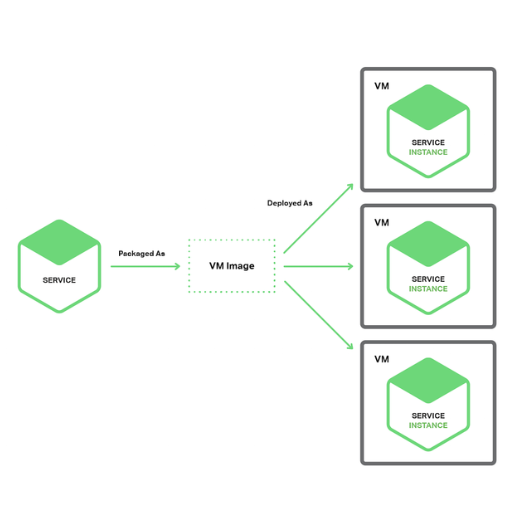
Establish Precise Limits for Every Service
Avoid redundancy and maintain functional modularity by describing the roles and objectives of each microservice.
Deploy Using Containerization
To maintain uniformity across various environments, use containers to deploy services with all required dependencies.
Create Comprehensive API Documentation
Facilitate inter-service communication with standardized microservice APIs, paying careful attention to documentation.
Utilize Automated Deployment Pipelines
Smoothen deployments and reduce manual errors by applying Continuous Integration and Continuous Deployment (CI/CD) pipelines.
Integrate Centralized Monitoring and Logging
Ensure maintainability by using reliable monitoring tools that can quickly detect service performance issues.
Implement security protocols for all service perimeter communications, ensuring proper authentication and authorization. Communication between services must be encrypted.
These steps allow organizations to achieve reliable and scalable systems when deploying microservices.
Best Practices for Deployment of Microservices
Deploying microservices while ensuring the smooth functioning of operations and the scaling of the entire system requires special attention. In the following paragraphs are some pointers that are helpful when deploying microservices, in tandem with industry practices.
Containerization with Kubernetes
Most modern microservices architectures deploy their services as containers. With tools such as Docker, developers can isolate applications along with their dependencies into containers which guarantee optimal performance in all environments. Kubernetes is an open-source and de facto standard for orchestrating and managing containers at scale. More than 90 percent of organizations have reported using Kubernetes in their microservices deployments, according to a CNSF survey in 2023, which highlights its unparalleled scalability and fault-tolerant nature.
CI/CD Pipelines for Automation
Adopting Continuous Integration and Continuous Deployment (CI/CD) pipelines provides organizations with the framework to build, test, and deploy microservices in an automated fashion. This is accomplished by using Jenkins, GitHub Actions, and GitLab CI/CD among other tools. Automating the process eliminates human error and accelerates deployments. Moreover, organizations embracing CI/CD pipelines have posted a 50 percent increase in deployment frequency, while deployment failures dropped by 70 percent, according to DORA (DevOps Research and Assessment).
Service Mesh for Communication
Istio and Linkerd are examples of service meshes that offer solutions for communication, traffic policies, and security on a service-to-service basis. It allows tracking and enforces uniform communication methods across all services. Reports indicate that organizations that used service mesh tools in 2023 experienced a 35% decline in latency across their architectures.
Observability and Distributed Tracing
Observability, logging, and monitoring need to be designed with a microservice architecture in mind due to the complexities involved in tracking issues for distributed systems. Prometheus and Jaeger help monitor and trace operational metrics, providing rich context into failures’ root causes. Operational efficiency, together with rapid incident response, is ensured by observability. A recent report from Gartner revealed that organizations with observability investments bolted reduce their mean time to recovery (MTTR) by 45%.
Ensure Robust API Management
API is the most crucial component of a microservice, thus, API management is crucial. Apigee and Kong are examples of tools that offer monitoring, security, and streamlining of an API’s use across the entire ecosystem. Managed APIs guarantee improved performance and policy compliance.
Capitalize on Serverless Platforms for Specific Functions.
For example, some microservices are best executed using serverless platforms like AWS Lambda, Azure Functions, or Google Cloud Functions because of enhanced cost efficiency. Serverless approaches automatically scale to meet the demand, incurring costs only for the actual compute resources consumed which is especially valuable in event-driven architectures.
With these practices in place, companies are able to maintain deployment efficiency and reliability at the microservices level while integrating modern tools to optimize operational costs and performance.
Using DevOps Tools for Seamless Integration
Just like automation on a factory line improves productivity, employing DevOps tools improves synergy between a company’s development and operations teams. As these frameworks, along with infrastructure as code (IaC), serve to automate CI/CD pipelines, organizations can shorten their development cycles and accelerate time-to-market. With Jenkins, GitLab CI/CD, and CircleCI Jenkins for example, teams can automate numerous processes such as building, testing, and deployment which decreases the amount of errors and required human intervention.
Many experts have begun adopting these tools. A recent Google Cloud report from April 2023 on DevOps trends claimed that organizations deploying advanced DevOps techniques achieved a 60% faster deployment rate than organizations with less mature techniques adopted. Also, the report proved that automated testing minimizes failures in multi-step deployments by 48%, which is a considerable savings in resources and time.
Docker and Kubernetes further enhance integration with their containerization and orchestrating capabilities because they standardize the environment an application runs and guarantee consistent deployment throughout different stages. Rapid scaling while complying with governance standards is made possible through IaC tools such as Terraform and Ansible, which aid teams in automating infrastructure provisioning.
Employing modern tools has made seamless integration easier than ever. Reliable, scalable, and secure systems can now drive innovation in a company’s competitive edge in the technology market.
Managing Multiple Microservices in Production
Running multiple microservices in a production environment introduces multiple problems, such as having to scale efficiently, monitor every single service, and guarantee proper interaction between each service. Organizations face new problems linked to distributed systems as the adoption of microservices architecture increases. Troubleshooting microservices-based applications is still multiple times more complicated compared to a monolithic system, according to a 2023 Google Cloud report which is cited by 77% of organizations.
Monitoring every single microservice is one of the main things that has to be done. Each microservice often runs separately as a container and can exist in separate cloud environments. Services can be monitored in terms of latency, resource consumption and error rates by each team using Prometheus and Grafana. Real-time statistics are provided by these services. Detection and mitigation of problems that are critical can actually be delayed from taking action when monitoring setups are incomplete or misconfigured.
Performance can be sacrificed without pthe proper enabling of dynamic scaling of microservices during traffic spikes. Those further reinforce the value of automated scaling features offered by Kubernetes. Over 70% of containerized app enterprises, according to Statista, now use orchestrators like Kubernetes, enabling resource allocation and load balancing, making them popular among developers.
Communication between different services can also incur risks during production. If not properly handled, network outages or misconfigured APIs can halt workflows. Istio and Linkerd have been adopted as service meshes to enhance network visibility, allow secure connections through mutual TLS, and streamline traffic control.
The integration of microservices in the production environment relies heavily on effective continuous delivery, thorough testing, and sophisticated DevOps tool implementations. By following these practices along with microservices-supporting platforms, organizations are likely to experience greater uptime, improved operational efficiency, and better customer satisfaction.
How to Refactor a Monolith to Microservices
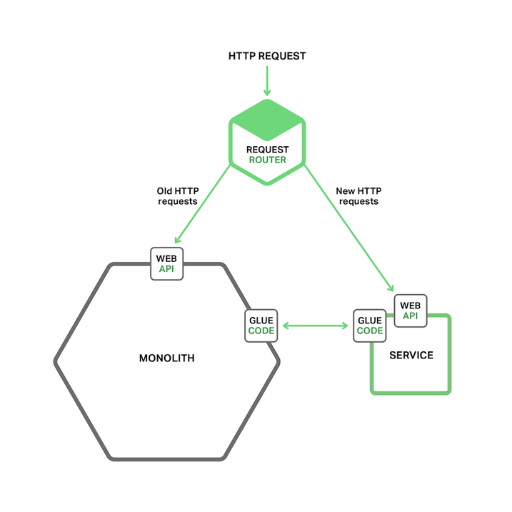
Steps for converting a monolithic architecture model to microservices require a shift in thinking. To achieve an organized conversion of a monolithic model to microservices without inflicting any damage, here are some steps that should be followed:
Assessing the Monolith
Accomplishing this goal begins with identifying the system’s components, all existing interdependencies, and deeply diving into their associated performance as well as scalability challenges.
Define The Microservices Boundaries
Crafting usable units either from a singular existing element or a group of them will be based on business-definable capabilities and domains.
Start Small
Picking up the first bottom section of the microservice will, in all likelihood, have little to no consequences. Push buttons for deployment and post-deployment testing.
Communication Establishment
PIVOT from deployment to implementing APIs, single-point communication protocols, to equally clear and nimble interaction amongst other microservices.
Raise Incrementally
Increase the system’s overall performance while simultaneously refactoring other components into microservices.
Monitor and Optimize
Constantly observe individual service performance to rest at a constant state of efficiency.
Following these steps will ensure the diminution of related complications as well as effective precision even during the transitioning phases, where organizations would want to shift from a monolithic structure to microservices.
Steps to Break Down a Monolithic Application
Changing a monolithic application to a microservices architecture isn’t something that can be done overnight. It is a multifaceted operation that demands careful planning and thoughtful implementation. Given below are the most recent industry benchmarks, steps in tandem with my earlier predictions.
Define Service Boundaries
Conduct a domain-driven design consultation to pinpoint the primary domains that exist in your application. Each domain can even act independently as its microservice. For instance, in an e-commerce platform, Orders, Payments and even Shipping can function as separate services. Recent case studies of Amazon and Netflix show that these companies have tried to use such an approach to functionality isolation previously.
Shrink The Application First
You don’t have to focus on one application entirely; lowering the volume of one monolithic app is a great place to start. Take a close examination of the monolith and try to estimate which existing features would be better off optimized. You may look at things like how complex dependencies are, how much they really need scaling, or how business-critical it is. As mentioned in one of my earlier reports made in the year 2023 by Gartner, isolating these most valuable supporting features first results in advanced ROIs in transactions.
Choose commands with the Principle Of Simplifying
Microservices tend to use lightweight protocols on the order of HTTP/ R E S T, gRPC, or a messaging system such as Kafka. Communication policy standardization should also be put in place. Up-to-date industry strides show that more and more applications with heavy loads are moving to the asynchronous queue communications model, especially those that require tight controls over increased data throughput.
Scoped Data Per Service Model (Abstract the Database Layer)
Accomplishing the goal of data separation per service by decoupling the database. Isolation is easier using a shared database, but ultimately, true separation can only be achieved using independent databases. Methods such as database-per-service or even CQRS (Command Query Responsibility Separation) are becoming increasingly popular due to better scalability and maintainability.
Replace Monoliths with Microservices (Develop Incrementally Using the Strangler Pattern)
Strangler pattern applies to partially or gradually replacing a monolithic architecture over time. Take, for example, a single business function like user authentication. The microservices architectural style allows for building flexible individual services that can be called at different business functions.
Adopt CI/CD Practices
Microservice architecture enables flexible solutions for each service. Combine it with effective automation tools such as Jenkins, GitHub Actions, and Kubernetes, and you have a bulletproof solution that allows for smooth deployments and frequent updates. A recent DevOps Trends Report highlighted that 80% of companies that adopted CI/CD pipelines for microservices reported a 40% drop in deployment failures.
Implementation of Observability and Monitoring
Prometheus and Grafana are examples of monitoring services that provide crucial telemetry information about service health and unit performance. OpenTelemetry and similar observability frameworks provide operational contexts by monitoring services and service interactions to identify bottlenecks. 74% of companies report that after implementing a strong observability framework, they enjoyed improved system reliability. A report surveyed 300 enterprise developers and found that 74% of companies recognize improved reliability after having robust observability frameworks.
Evaluating and Confirming Accuracy
Thorough examination is required to verify that each microservice works in isolation and in conjunction with the entire system. Automated test cases should be made for unit, integration, API, and end-to-end testing. Recent studies show that teams using testing environments in the cloud experience a 30% reduction in system downtimes. We wish to maintain the same logic; in our case, reducing downtimes is vital.
In the context of uplifting an organization, adopting new tools, techniques, and practices aids in deconstructing monolithic applications effortlessly. Such systems are flexible, sturdy, and can be efficiently adjusted to the needs of modern business.
Ensuring Smooth Transition with Microservices Patterns
Migrating to a microservices architecture can be problematic, but following architectural patterns makes the transition easier and more successful. One pattern is the Strangler Fig pattern, where new functionalities are built out as microservices that incrementally replace portions of a legacy monolith. This allows for a more controlled, progressive system change, eliminating the need for complete system revamps and minimizing risk.
Another important pattern is that of an API Gateway Implementation which serves as the one-stop shop for incoming requests; it handles request routing and composition as well as protocol translation. Studies indicate that companies with an API gateway experience an increase of 25% in overall operational efficiency due to improved communication between services and increased scalability.
Furthermore, employing Circuit Breakers as a form of fault tolerance can protect applications from suffering cascading failures. New research indicates that systems utilizing circuit breaker patterns have an uptime of 98% during service interruptions, which drastically improves dependability and user experience.
Integrating all of these patterns, along with modern containerization technologies like Docker or orchestration software like Kubernetes, enables businesses to increase deployment frequency by up to 200%, according to studies published by Google in 2023. This ensures that new features are integrated into the system without disrupting existing services while shortening release cycles.
A continuous monitoring and feedback loop integrated with a data-driven approach will further ensure successful transitioning. As noted in Gartner’s recent report, organizations using microservices patterns integrated with observability within software tend to spend 40% less time debugging, allowing teams to concentrate more on innovation rather than urgent issues.
Challenges and Solutions in Refactoring
Even though it is critical to code quality and changeable needs, refactoring introduces its challenges. One of the most difficult is managing technical debt that is often intertwined with increased complexity and may require a lot of time to unlock changes. Research from Stripe suggests that developers can spend as much as 33% of their time addressing technical debt, costing corporations in lost productivity billions of dollars every year.
Perhaps most reorganizers have a lack of testing and version control, leading to system breaks and underperformance over time. Coupled with vague or absent documentation, inconsistent coding styles make coherent team alignment more difficult and increase the havoc in the codebase, which complicates the refactoring effort in the first place.
Automation tools for testing guarantee validation of modifications against the rest integration of the system. Continuous feedback from frameworks such as JUnit or Selenium is critical in minimizing the chances of new bugs being introduced. In addition, the integration of observability tools such as Datadog or Splunk allows for enhanced tracking of system behavior, enabling prompt detection and resolution of team bottlenecks during refactoring. To facilitate better maintenance refinements, Google advocates the adoption of microservices as they are easier to scale, maintaining modularity without compromising performance.
Adjustments in techniques are almost always more manageable than a complete rework; equally, an incremental approach to change tends to carry less risk. Accompanied by collaboration frameworks, GitHub, Jira, or Google Workspace, every stakeholder is kept in the loop and out of sync for smooth progress. Coupled with these approaches, businesses are better positioned to leverage the ease of outlined refactoring challenges and integrate systems smartly to achieve enduring innovation.
How Do Microservices Communicate with Each Other?
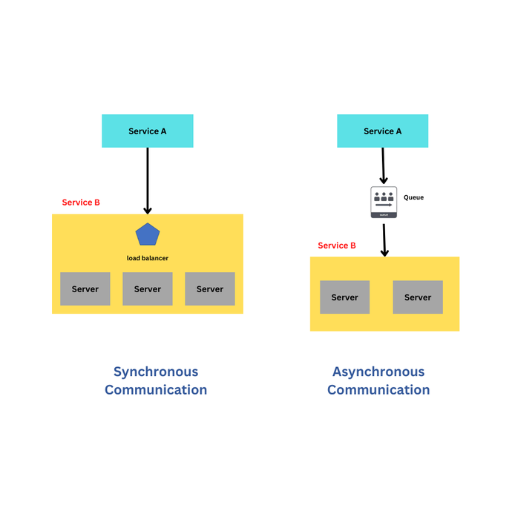
Microservices interact with each other through data and request transfer using APIs (Application Programming Interfaces). The two methods most frequently used are synchronous communication, often conducted over HTTP-based protocols such as REST or gRPC, and asynchronous communication via message brokers like RabbitMQ and Apache Kafka. Synchronous communication entails real-time back-and-forth replies between services, whereas asynchronous techniques enable services to handle messages without being dependent on other processes. Each method has its unique advantages by the needs of a given system related to its performance, dependability, and expandability.
Using API Gateway for Efficient Communication
An API Gateway is a focal point for clients to access multiple services, managing the traffic flow, aggregating requests, and translating different protocols on their behalf. It facilitates client access to microservices in contemporary architectures while attending to high performance, security, and scalability.
Latest Insights and Analytics
Standout tech companies provide extensive research and case studies demonstrating API Gateways boosting system efficiency by 30-40% on average due to reduced latency and optimized resource utilization. An example includes API Gateways hosted by Netflix which process billions of requests every day, aggregating output responses from numerous microservices into a single output per client. Such systems drastically reduce network traffic while providing responsive services to clients.
Main Components of API Gateways
Request Routing: Redirects calls by clients to associated service endpoints to enhance efficiency and guarantee precision in communications.
Load Balancing: Optimally allocates requests to avoid saturating individual services, thus maintaining system stability and strength.
Security: Protects APIs from malicious attacks with the use of authentication, authorization, and rate-limiting policies. These API transactions are made more robust through OAuth 2.0 or JWT token integration.
Example Case Study
The 2023 Google Cloud report features an enterprise case study where API Gateway implementation in e-commerce systems reduced request round-trip times by 25%. With the addition of caching and compression, the enterprise was able to reduce bandwidth usage by 15%, improving user experience while reducing costs.
As highlighted, integrating an API Gateway enables enhanced control over managed services, further leading to increases in an enterprise’s scalability, operational efficiency, and security. This becomes increasingly important with the shift of organizations adopting distributed systems and moving towards a microservices architecture.
Implementing the Circuit Breaker Pattern for Reliability
The circuit breaker paradigm constitutes the most important resiliency step for modern distributed as well as microservices architecture. Its primary purpose is to stop the cascading effect of failures in multiphase systems and allow for the graceful handling of faults in dependent services. A service performing poorly or failing repeatedly in its interactions with its downstream dependency will “trip” when a circuit breaker is activated, thus stalling any further attempts at accessing the degenerating service while, at the same time, issuing default responses. This control prevents probabilistic receding of the declining service at the expense of the other services, doing well while enabling the rest of the system to operate normally.
To block the circuit breaker pattern’s properly defined algorithm, developers may use some publicly available libraries, such as Netflix’s Hystrix or Resilience4j, as well as cloud framework-provided tools. Recent studies say that services with circuit breakers reported as much as 60% increased reliability of the whole system in times of high load. For example, cascading failures of the streaming service infrastructure resulted in major downtimes on Netflix and implementing the circuit breaker pattern bolstered their uptime.
Recent research and implementations focus more on combining the circuit breaker with monitoring tools and dashboards. This makes it easier to track when circuit breakers trip in real-time, allowing engineers to pinpoint the center of the problem quickly. For instance, using Prometheus with Grafana enables engineers to react promptly to issues by providing better foresight into system health and failure patterns, which helps with monitoring even with circuit breakers in place.
Moreover, with the advancement of serverless and cloud-native systems, it is commonplace to see circuit breakers integrated as part of a service mesh such as Istio or Linkerd for central fault tolerance and automation of retry policies. In the case studies of Google Cloud’s microservices best practices, they emphasize the combination of retries, timeouts, and the use of circuit breakers to provide exquisite fault isolation and responsiveness which is vital from a customer’s perspective, especially in high-scale applications.
With the customization and adoption of the circuit breaker pattern, companies are able to improve the reliability and fault tolerance of their systems, making sure that the user experience is seamless even when there are unforeseen service disruptions.
Handling Message Passing Between Services
Effective message passing within microservices enables communication between services, fostering decoupled systems while maintaining resilience and scalability. Performance, as well as messaging pattern and framework selection, is crucial to system maintenance when services require interaction.
1. Communication can be Synchronous and Asynchronous:
Synchronous communication implements interactions using REST APIs or gRPC. These methods allow real-time interaction but are prone to tight coupling, which may lead to cascading failures if downstream services become unavailable. It is far more effective to utilize asynchronous communication, which is done through message brokers such as Kafka, RabbitMQ, and Google Pub/Sub. Through these methods, services are decoupled, allowing better fault tolerance. Recent research by Google Cloud in 2023 suggests asynchronous protocols can slash system downtime by 40% in high-scale environments.
2. Selecting The Correct Protocol:
Every case is different, therefore, the selection of protocol depends entirely on the scenario at hand. For instance, gRPC features high performance for real-time streaming, but is less utilized than HTTP, which offers simplicity and broad compatibility. Studies conducted by Google on high-traffic systems suggest that gRPC can outperform REST in certain scenarios, boasting a 20-40% reduction in latency which is ideal for time-sensitive applications.
3. Applying Idempotency alongside Ordering Guarantees:
In the context of reliable message-passing systems, idempotency facilitates the lack of unintended consequences if a given message is delivered multiple times. Brokers of the advanced type, for example, Kafka with its “exactly-once” semantics and partitioned logs, offer ordering and delivery guarantees even with systems implementing millions of transactions per second. Kafka currently supports performance benchmarks surpassing one million messages per second and maintains system throughput resilience under high stress loads.
4. Monitoring and Observability:
Integrated Monitoring systems like Google Cloud Monitoring, Prometheus, or dedicated observability tools play important roles in monitoring message flow, tracking latency, and capturing failures. Advanced observability mitigates scenarios where developers are forced to interface with escalated issues, capturing bottlenecks before they occur. Service performance dashboards that blend metrics and traces are reported to decrease the average time to resolve issues by 60%.
These suggested approaches, coupled with innovations in tools, can help organizations design scalable and effective service communication channels that enhance system performance and resilience.
Reference Sources
- Design of Modern Distributed Systems Based on Microservices Architecture
This paper investigates approaches for transforming monolithic applications using a top-down heuristic microservices decomposition approach.
- Microservices: Architecture and Technologies
Analyzes the microservice architectural pattern along with the prerequisites for its effective implementation.
- Staff Lecture Notes on Interoperability of Microservices in Different Domains
Describes interoperability with an emphasis on constructing robust systems utilizing microservices architecture.
Frequently Asked Questions (FAQs)
Q: What is microservices architecture?
A: Microservices architecture is an approach to application development where a large application is composed of small, independent services that communicate over APIs. These microservices can be developed and deployed independently, allowing for greater scalability and flexibility compared to traditional monolithic architectures.
Q: What are the benefits of microservices architecture?
A: The benefits of microservices architecture include improved scalability, as each service can be scaled independently, increased resilience through isolation of faults, and enhanced flexibility in using different programming languages and technologies for different services. It also facilitates continuous deployment and integration, making it easier to deploy updates and new features.
Q: How do microservices communicate with each other?
A: Microservices communicate with each other through APIs, often using HTTP/REST or messaging protocols. An API gateway is commonly used to manage communication, providing a single entry point for the entire application and handling tasks like authentication, routing, and load balancing.
Q: What are some best practices for implementing microservices architecture?
A: Best practices for implementing microservices architecture include designing services to be self-contained and loosely coupled, using domain-driven design to align services with business capabilities, employing the circuit breaker pattern to handle failures gracefully, and implementing comprehensive monitoring and logging to track metrics and performance.
Q: How does a microservice architecture differ from a monolithic architecture?
A: In a monolithic architecture, an application is built as a single, tightly coupled unit, making it difficult to scale or update individual components. In contrast, a microservice architecture separates the application into multiple independent services, allowing for easier scaling, development, and deployment of individual services without affecting the entire application.
Q: What role does an API gateway play in a microservices architecture?
A: An API gateway acts as a single entry point for client requests in a microservices architecture. It handles tasks such as request routing, composition, protocol translation, authentication, and load balancing, simplifying communication between clients and multiple microservices.
Q: How can a developer refactor a monolithic application to microservices?
A: Refactoring a monolithic application to microservices involves identifying and extracting business capabilities into independent services, ensuring they can be deployed independently. Developers should focus on decoupling dependencies, using APIs for communication, and gradually transitioning parts of the monolithic application to microservices to minimize risk.
Q: What are the challenges of using microservices architecture?
A: Challenges of using microservices architecture include managing increased complexity due to multiple services, handling data consistency across distributed systems, ensuring robust inter-service communication, and implementing effective monitoring and logging due to the decentralized nature of the architecture.
Q: Can you provide some examples of applications using microservices architecture?
A: Examples of applications using microservices architecture include Netflix, Amazon, and Uber. These companies leverage microservices to achieve high scalability, resilience, and rapid deployment of new features, enabling them to adapt quickly to changing customer demands and market conditions.


